Twin Peaks X ACNH
DA-0004-9148-3376
David Lynch’s Twin Peaks was quite possibly the most influential bit of television I consumed when I was young. And I was young. I was twelve years old when it premiered and I tuned in for every single episode. Frank Silva’s face at the foot of Laura’s bed was the scariest thing I’d ever seen. I went to a bookstore in the mall and bought a paperback copy of The Secret Diary of Laura Palmer that made me want to be a blonde with a drug problem by the end of high school. I named my cat Audrey. It made me want to be a forensic detective for the FBI, which is why I tried to join the Marine Corps after high school. I ended up marrying a Marine instead, but I never lost my passion for Lynchian darkness.
When the pandemic hit, my kids were housebound and playing Animal Crossing New Horizons on the TV in the living room. I’m aurally strange and the haptics of them rearranging the contents of their pockets, the plop of the bobber when they fished, and the echoey elevator music of the museum were distracting as hell. The siren song of the Switch was strong and I ended up moving onto my middle kid’s island. Things got weird from there. I had to buy my own Switch and start my own island. I HAD to. It took fourteen months to finish collecting all the fish, bugs, sea creatures, fossils, and artwork for the hotel. I did extensive gardening to grow the elusive blue rose and yes, I gasped when I woke up and found it next to my flowerbed. I made millions on the stalk market and populated Harv’s co-op. I did everything I could on the game before realizing the potential for a wildly accurate Twin Peaks replica island. Switching to the communal household Switch, I hijacked the kids’ accounts and started building.
With the exception of creating Snoqualmie Falls outside the Great Northern Hotel, I did very little terraforming. It’s just not in my wheelhouse. Same for custom patterns. I used images to generate some designs and borrowed from other Twin Peaks ACNH islands for the most part. Only a few of them are original. I chose songs from KK Slider’s repertoire that I felt appropriate for specific scenes and added some sound effects, so make sure you have the volume turned up.
Every villager on the island was selected for their significance to Twin Peaks. Judy from Fire Walk With Me, Lucy/Lucy Moran, Norma/Norma Jennings, Maddie/Madeline Ferguson, Doc/Doc Hayward, Bob/Bob, Ed/Big Ed Hurley, Jacques/Jacques Renault, Kyle/Kyle MacLachlan (Agent Cooper), and Ray/Ray Wise (Leland Palmer). I used my kids as Cooper and Harry, and the character for my own account is unfortunately still named Caity, even though she looks like Audrey Horne.
One of the tricky parts of recreating sets from Twin Peaks is the lack of consistency between different seasons of the original show, The Return, and Fire Walk With Me. I stuck mainly with the first season, snippets of the second season, and elements from Fire Walk With Me. For example, there are different homes used for the exterior of the house used for the Palmer residence. The rooms inside the house change as well. The Double R, the Twin Peaks Sheriff’s Department, the Black Lodge, the Roadhouse: they’re constantly changing. There’s a painting of a pine tree hanging in the Sheriff’s Department that’s actually several different paintings over the course of the series. Even the nightstands in Agent Cooper’s hotel room are different as the story progresses. I chose my favorite bits and pieces and was sometimes limited by what was available in the game.
The layout of Twin Peaks was another challenge. My island is random as hell. Jacques Renault’s cabin is tucked back in the woods, but the Log Lady’s cabin is on the other side of the island. The Packard Sawmill is right behind Mrs. Tremond’s house and the beach where Laura’s body was found is at the very northernmost point of the island. Because so many aspects of the sets required interior items, I filled the rooms of my house and my kids’ houses with various scenes from the show. A few places appear more than once, like the Double R, The Hayward and Palmer living rooms, the Black Lodge, and the Sheriff’s Department. You’ll find them in both the player houses and the homes of the corresponding villagers. There are also some locations that are only facades, like the Roadhouse and the Johnson’s place.
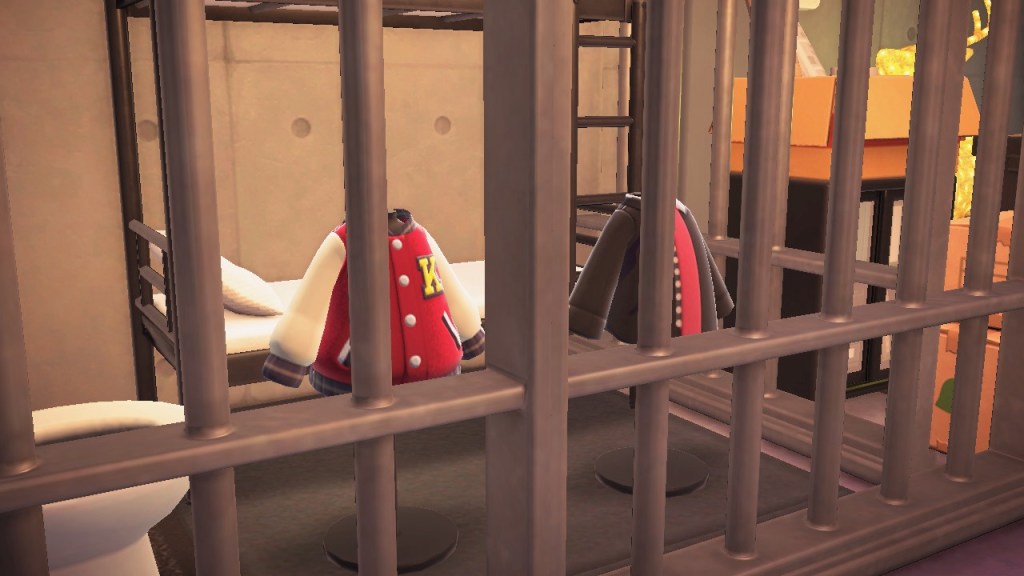
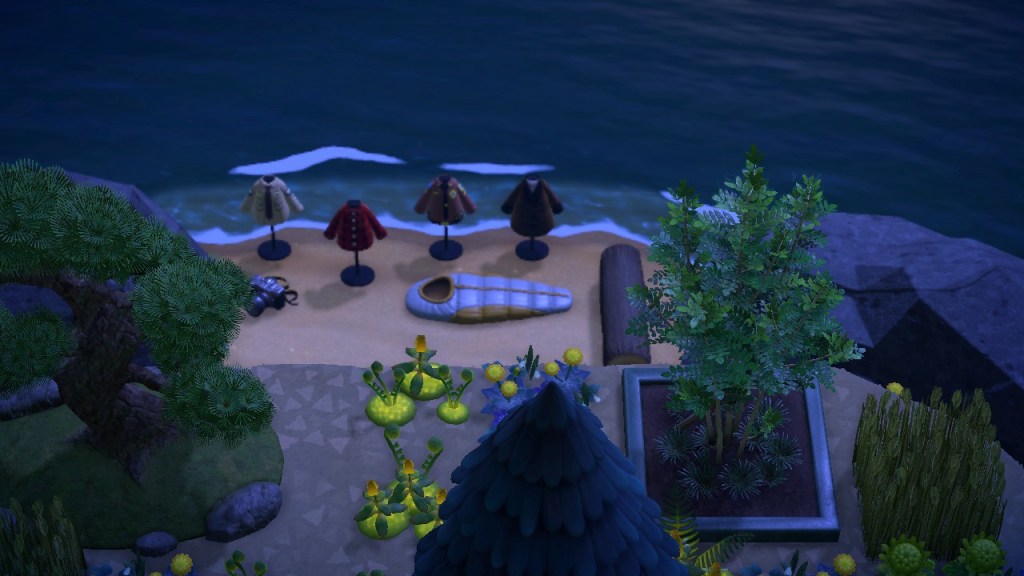
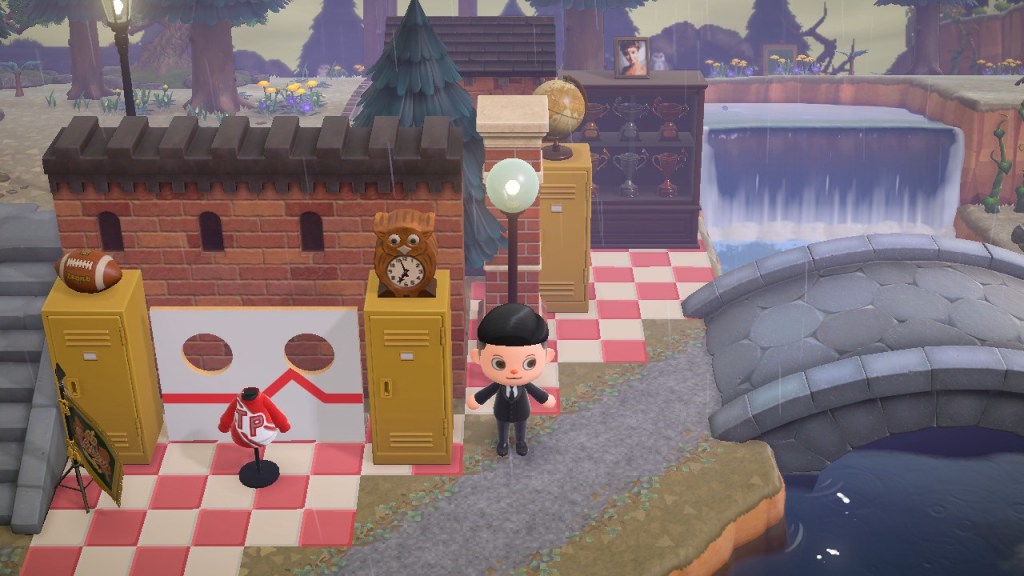
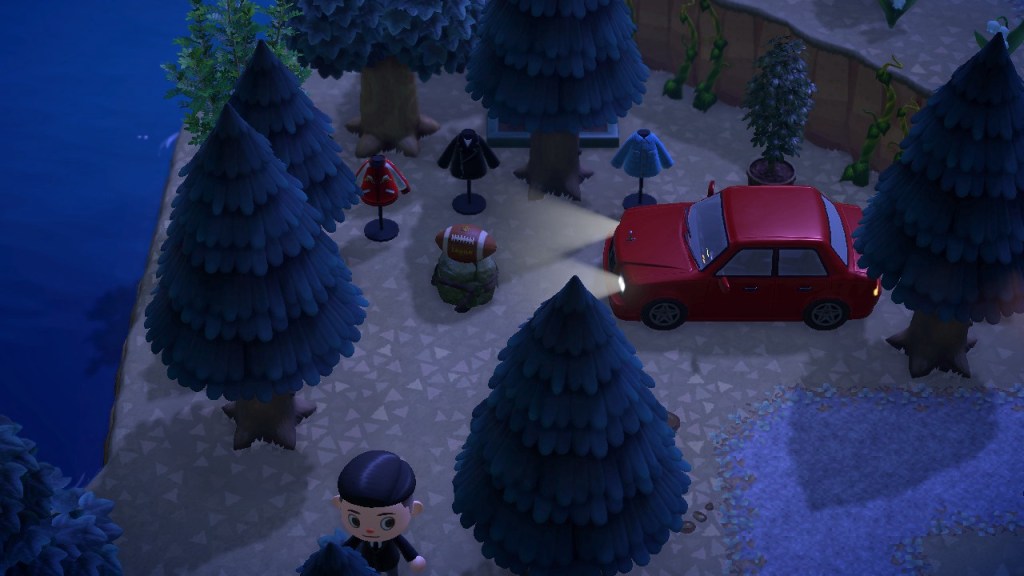
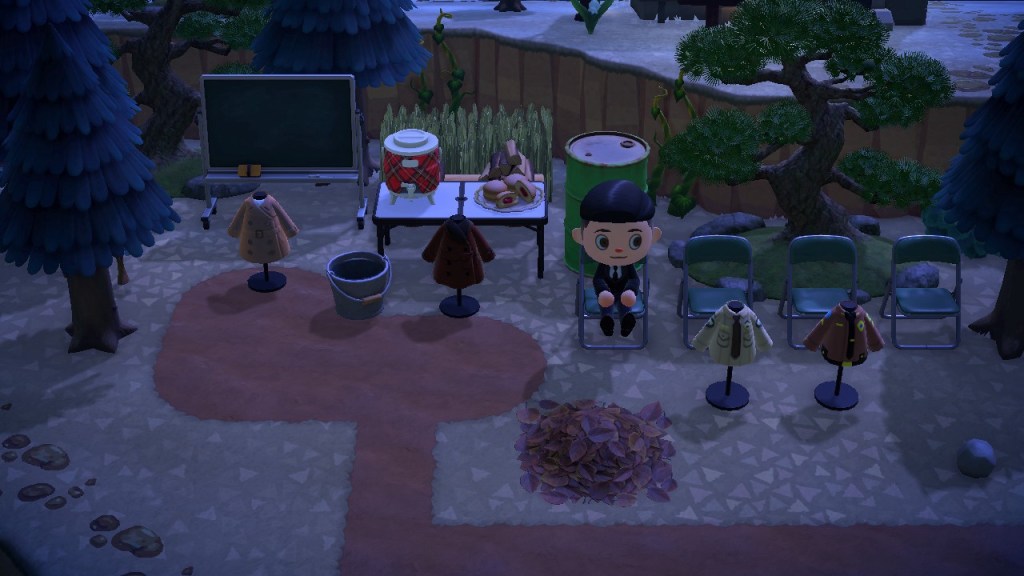
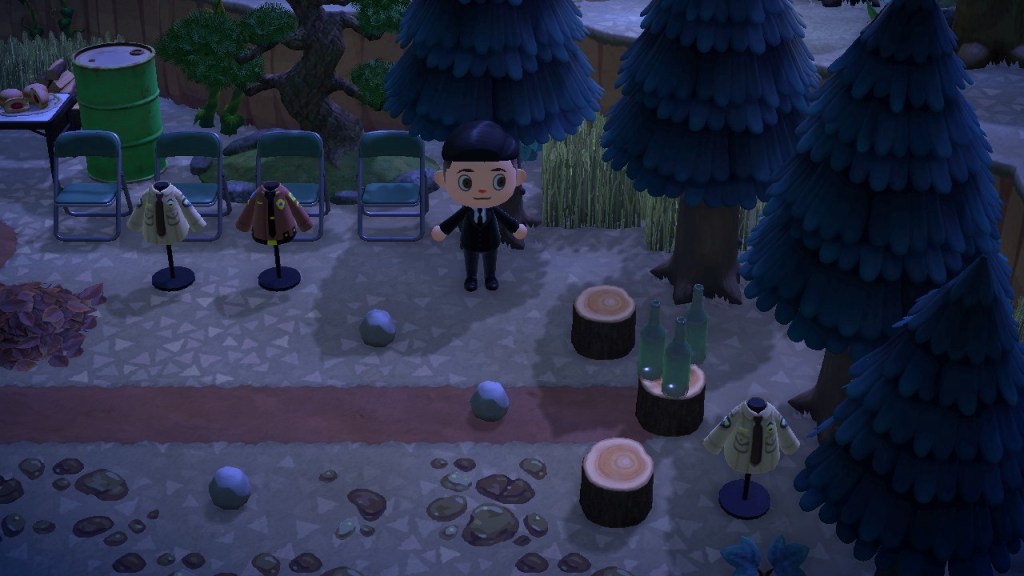
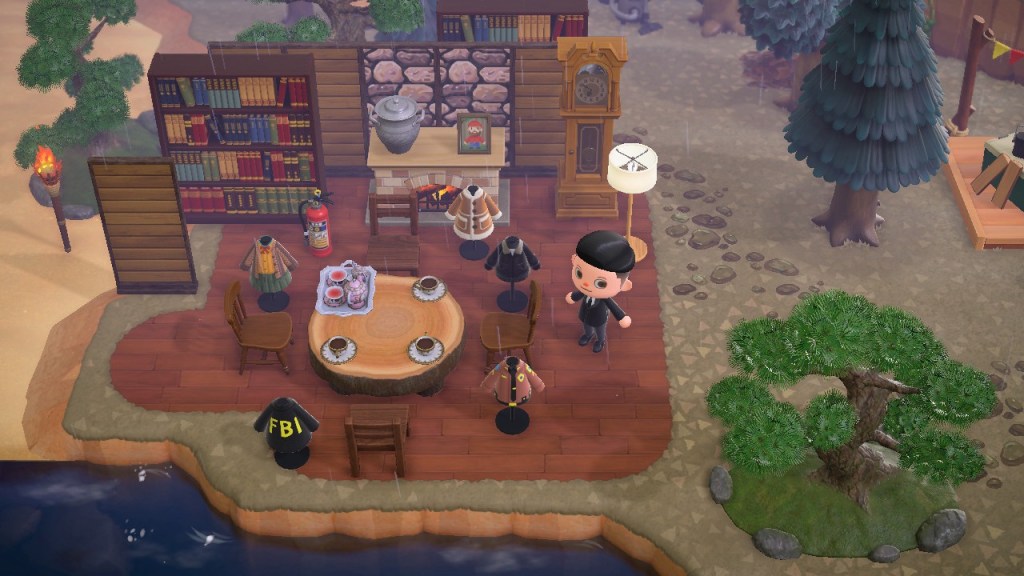
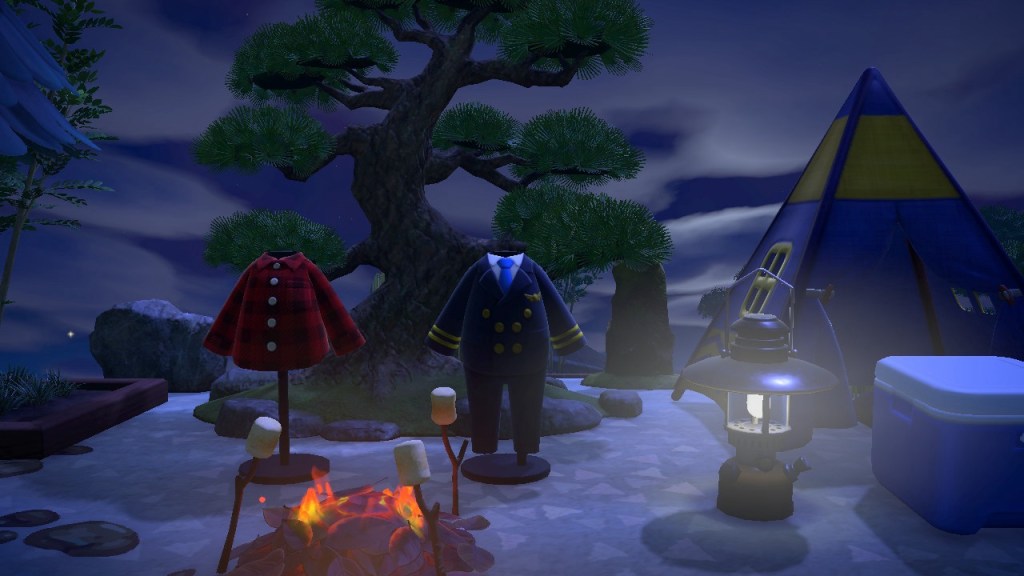
Another issue was costuming. There are tableaus from the show speckled throughout the island where the characters’ costumes are different. Deputy Hawk is usually represented by a khaki uniform instead of his cardigan and Mike and Bobby are often a letterman’s jacket for Mike and a thermal under a red tee or a black leather jacket for Bobby. Major Briggs is camping in his uniform and Donna is a pretty generic skirt/sweater combo instead of being scene-specific. Sometimes it’s for quick character recognition, other times it’s a lack of talent for custom design on my part. Hopefully you’ll see what I’m getting at when you visit the island.
There are a few random Easter eggs like snowshoe rabbits, traffic lights, and owls. I had way too much fun.
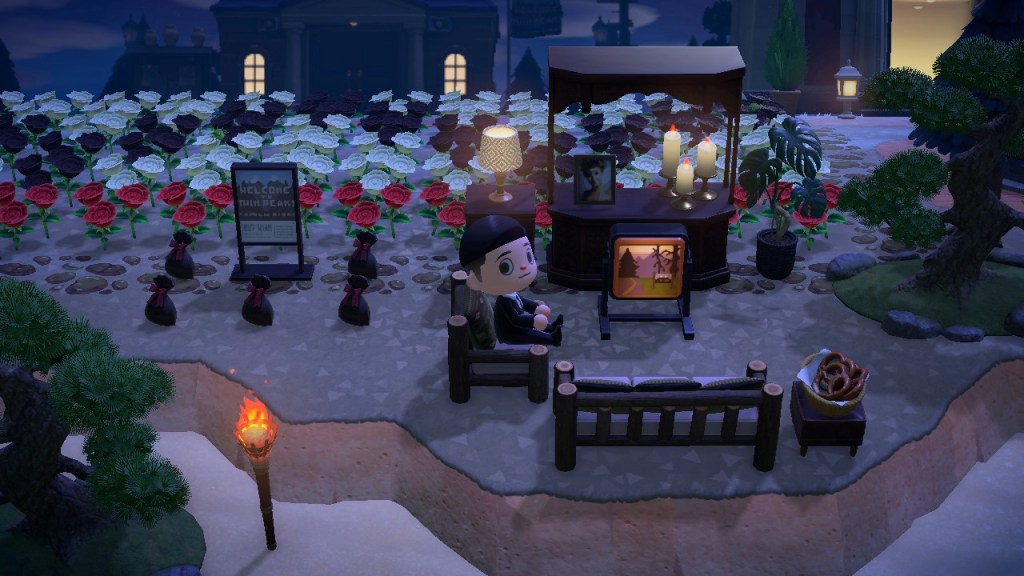
Waking up in Twin Peaks, the first thing you should do is head down through the rose garden to the welcome center. Have a seat and catch the opening credits on the television, then open the presents I’ve left for you. You’ll need the ladder to climb down to the beach where Laura’s body was found. Put on the trench coat, grab your coffee, and start exploring.
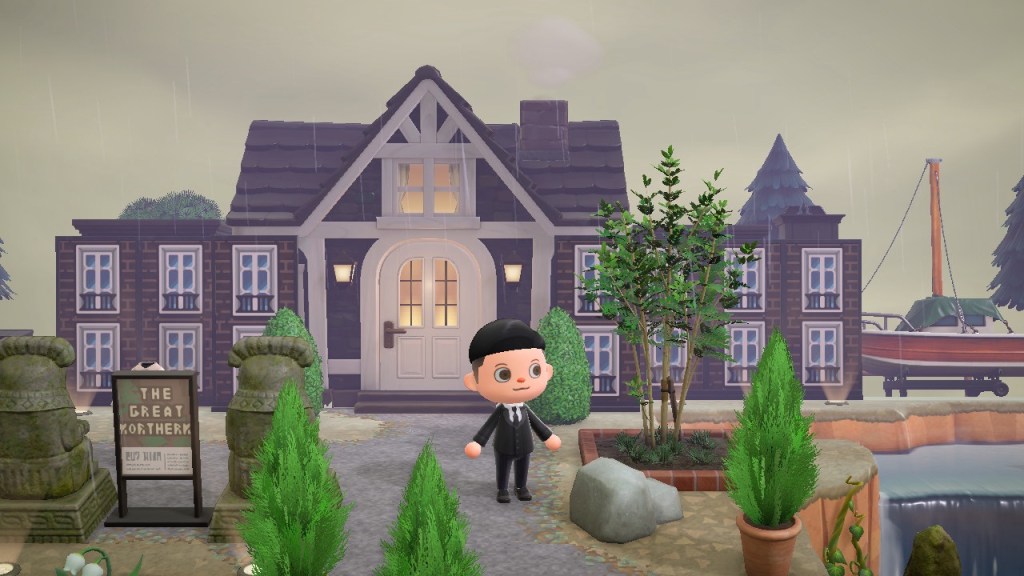
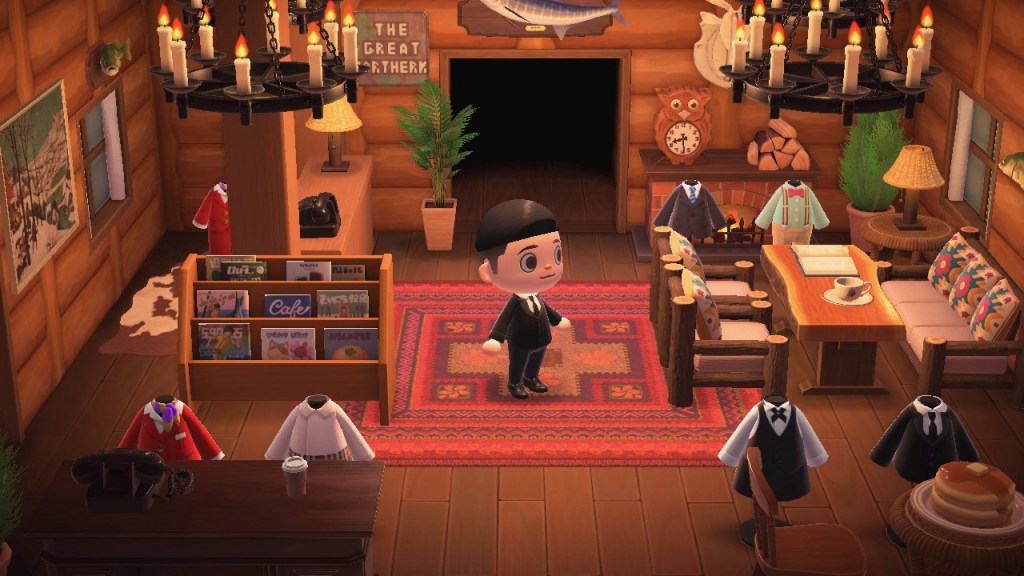
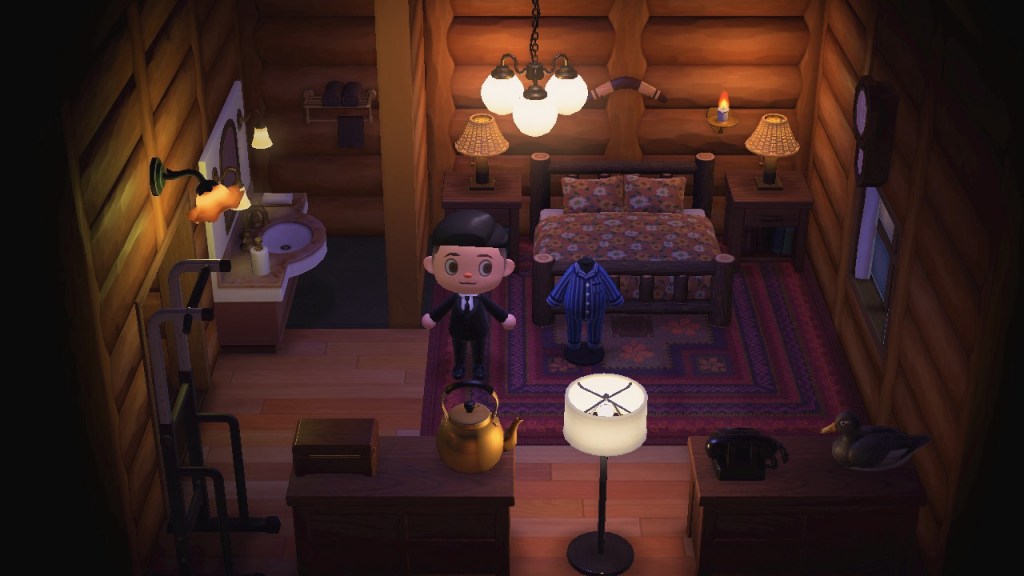
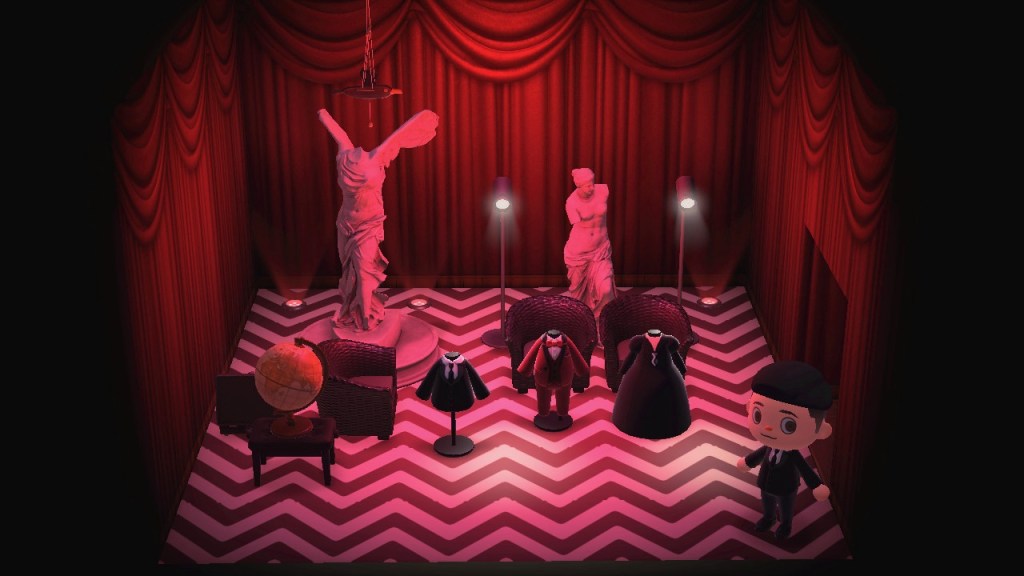
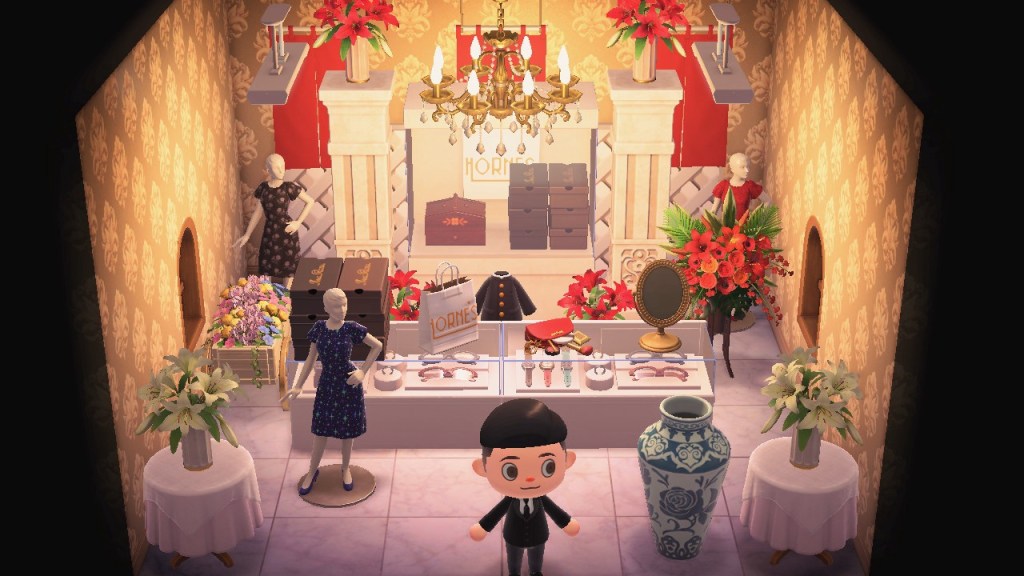
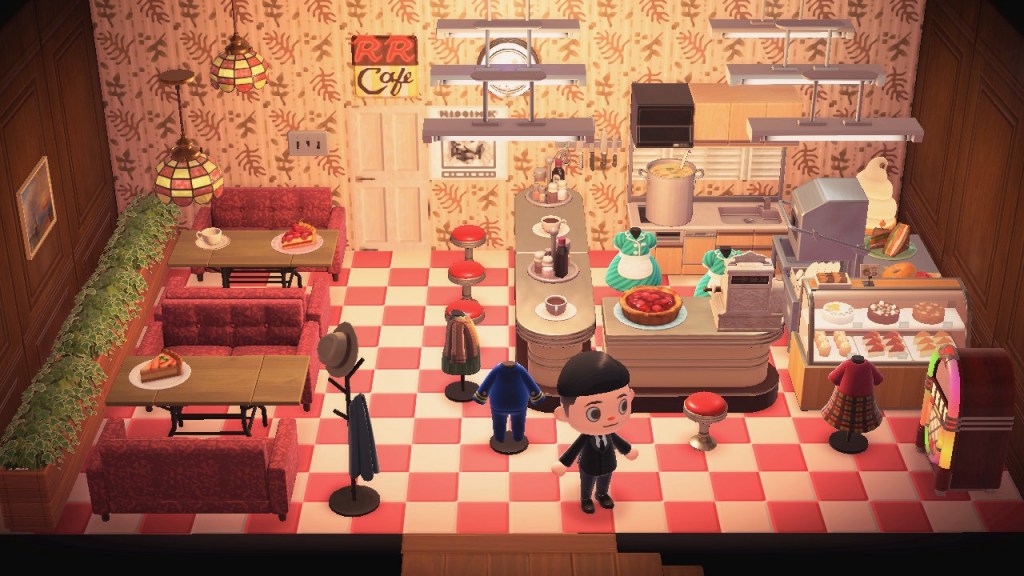
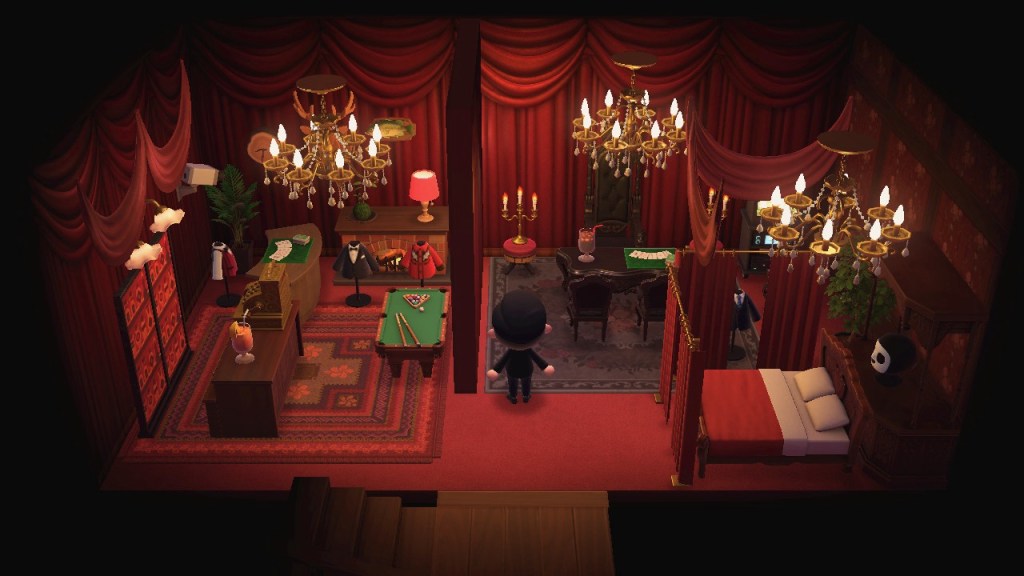
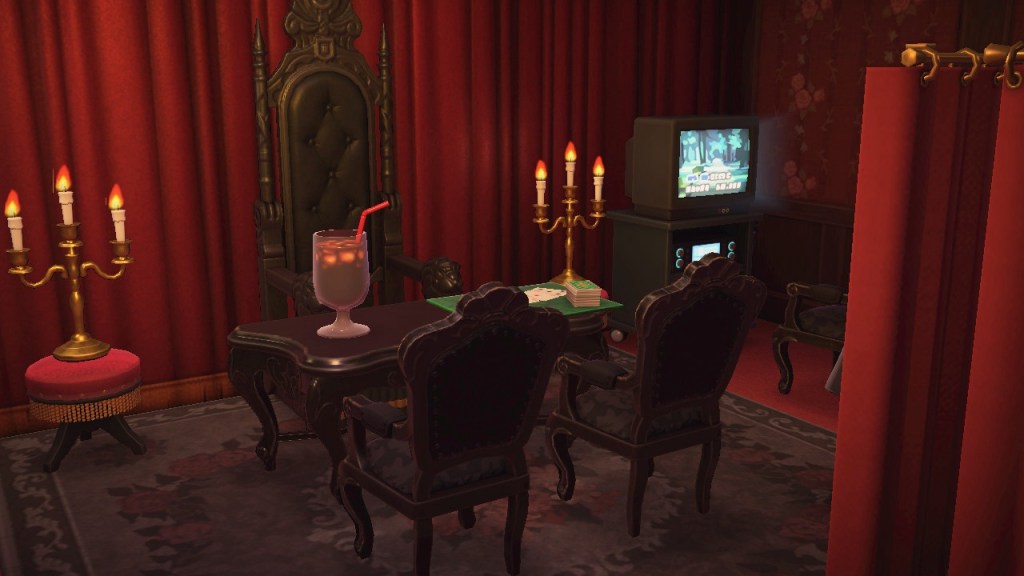
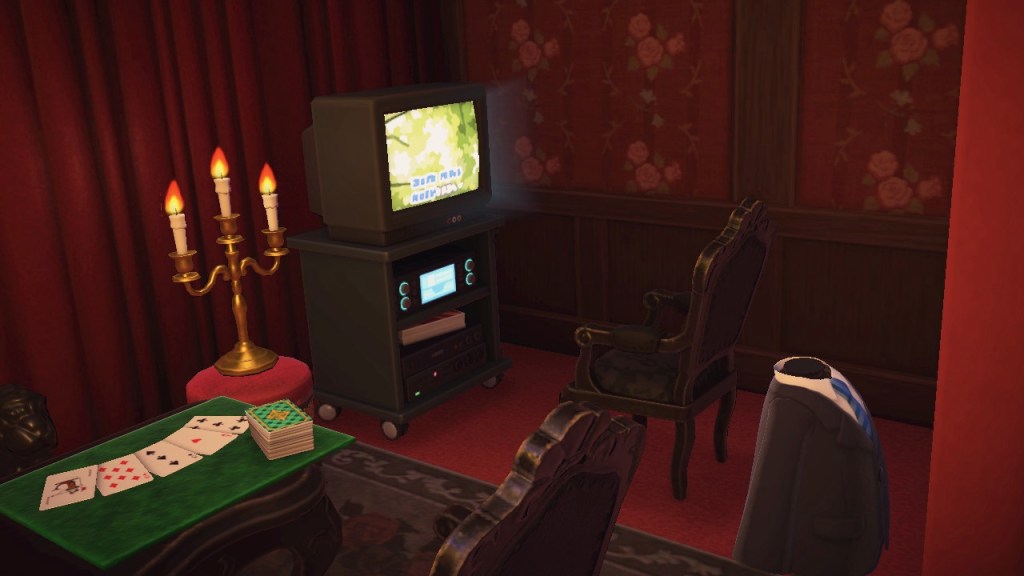
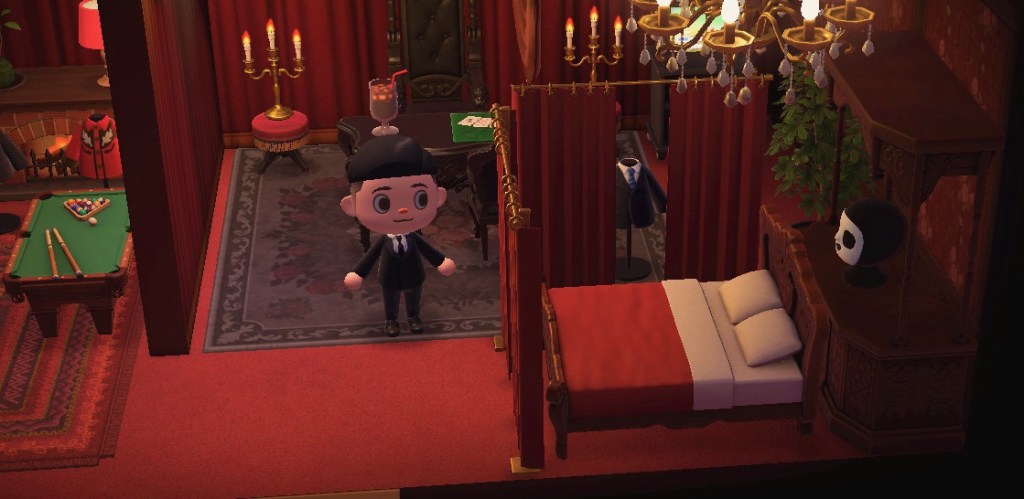
The Great Northern Hotel (Cooper’s house) is built at the highest point on the island, overlooking scenic Snoqualmie Falls. Audrey Horne is leaving for school out front and Benjamin Horne’s boat is in the back, waiting to head off to One-Eyed Jack’s. The main room is the lobby, including Agent Cooper’s pancake breakfast, Audrey tormenting Julie, and Ben and Jerry Horne by the fireplace. To the right is Agent Cooper’s room with a custom bedspread and a boomerang instead of a gun mounted over the headboard. I made sure to add the kettle, black wooden duck, towel rack, and the infamous bathroom sink from the last episode of season two. To the left is the Black Lodge with Laura’s angel from Fire Walk With Me and a scene from Agent Cooper’s dream. In the back is the perfume counter at Horne’s Department Store, complete with lattice, the flower cart, and a mannequin version of the life-sized cardboard standee for Invitation to Love perfume. Upstairs is the Double R Diner with Shelly and Norma behind the counter. The Log Lady and Major Briggs are talking at the counter (“deliver the message”) and Audrey’s dancing to Angelo Badalamenti on the jukebox. In the basement, you’ll find One-Eyed Jack’s, where Cooper and Ed are undercover and Jacques is running the black jack table with a security camera over his shoulder. The canopy bed where Audrey/Hester hides from her father/the owner in the little white mask is visible in the corner, and behind it is the location where Jean, Blackie, and Emory film the kidnapping video.
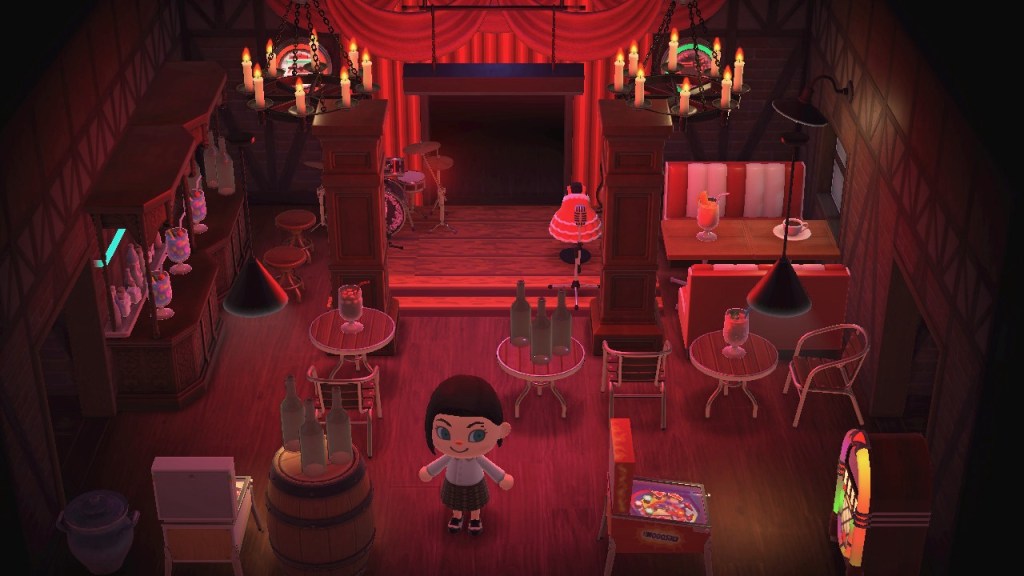
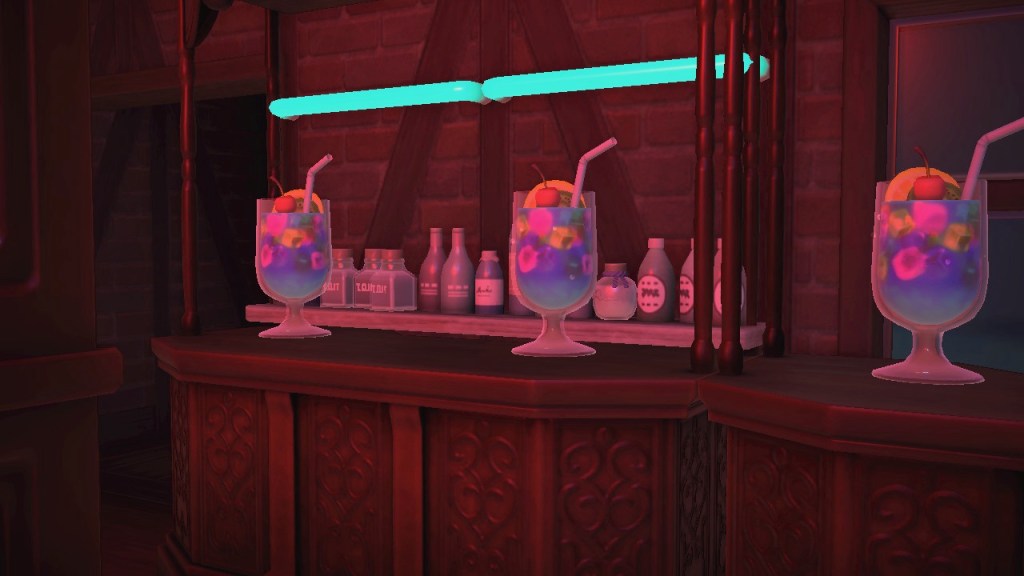
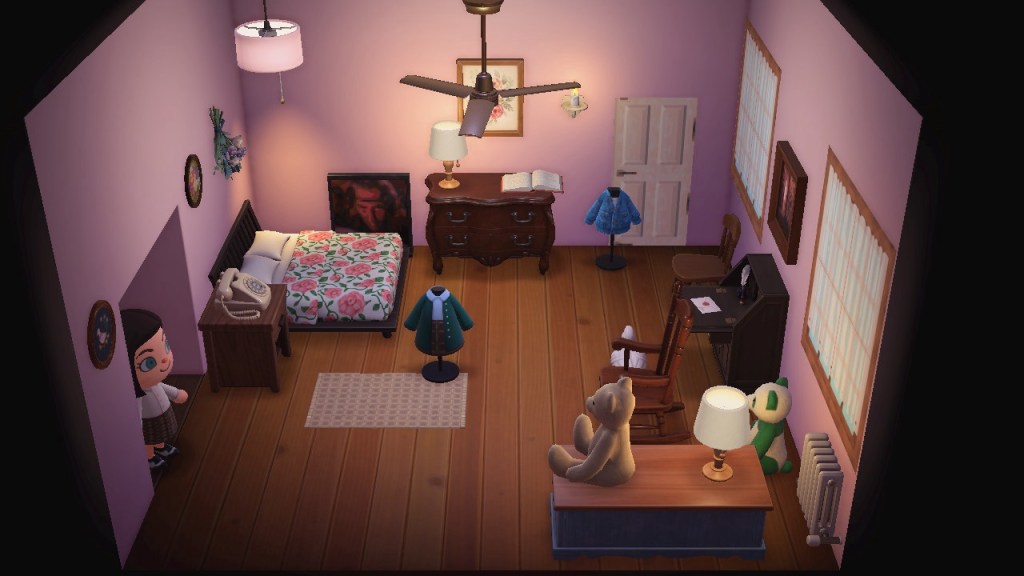
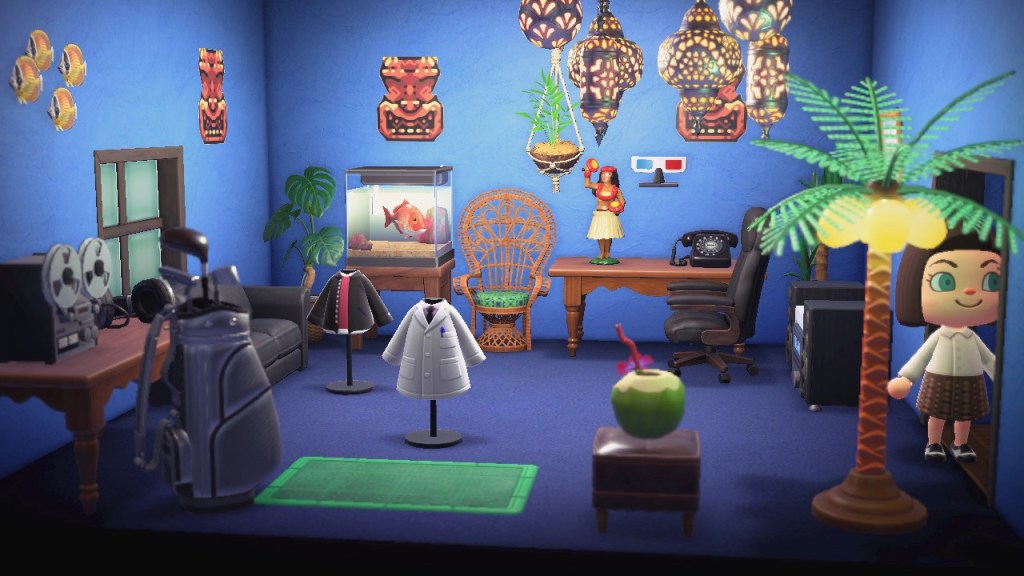
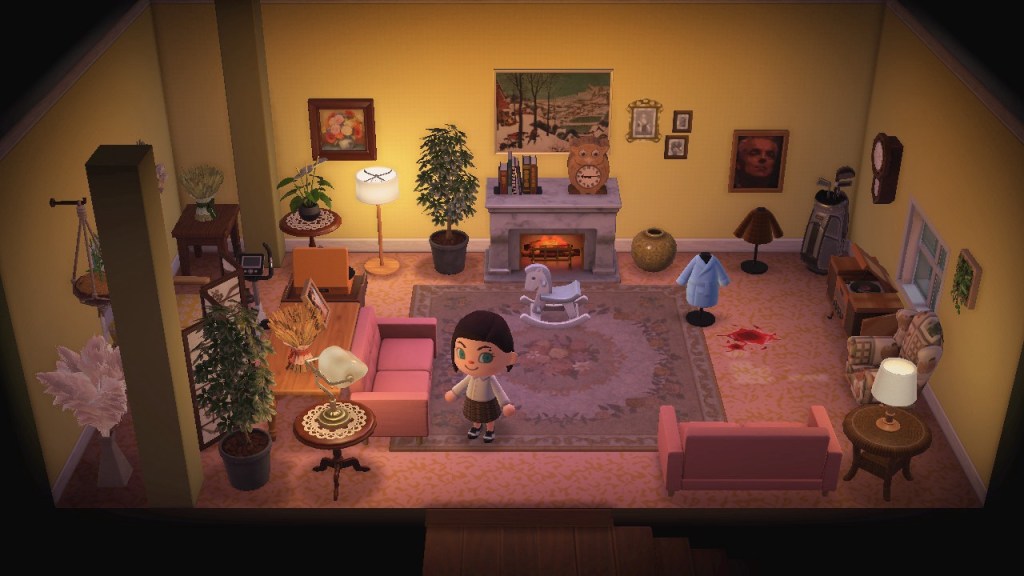
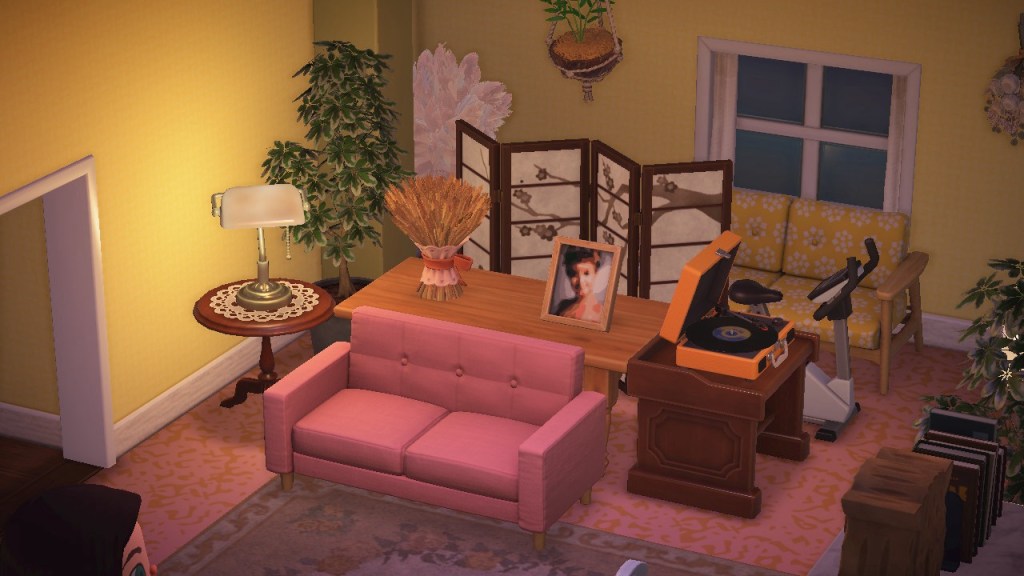
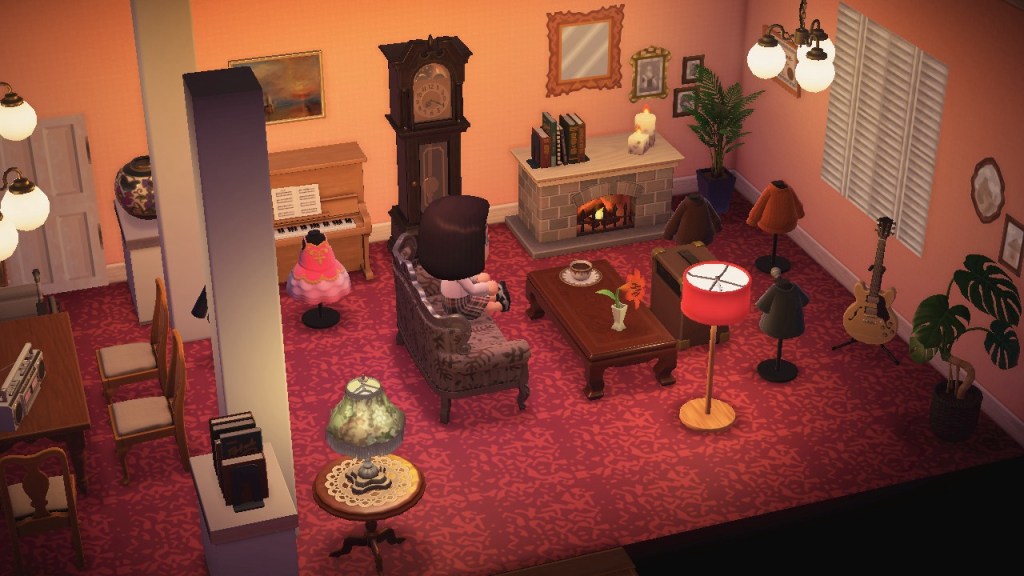
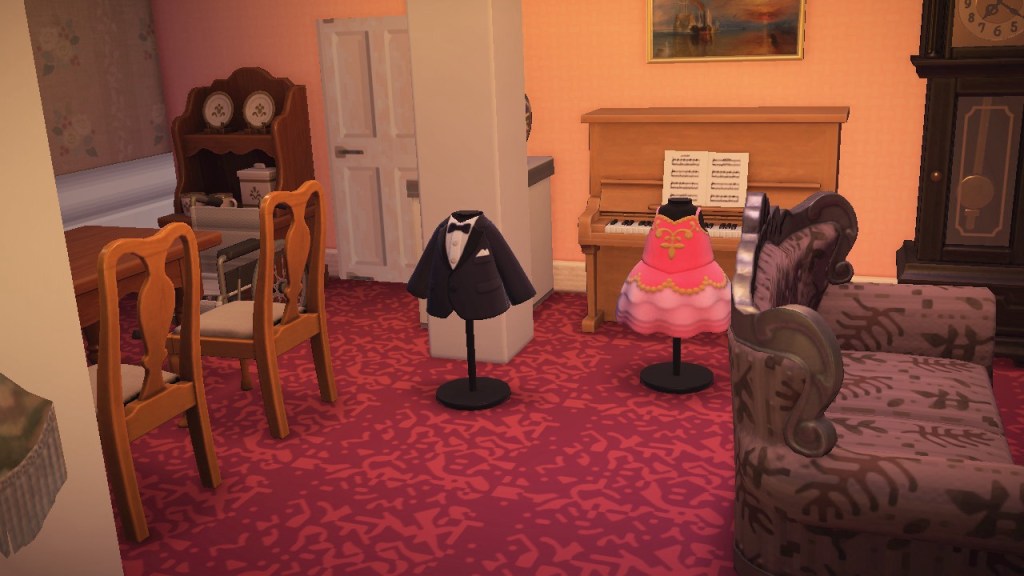
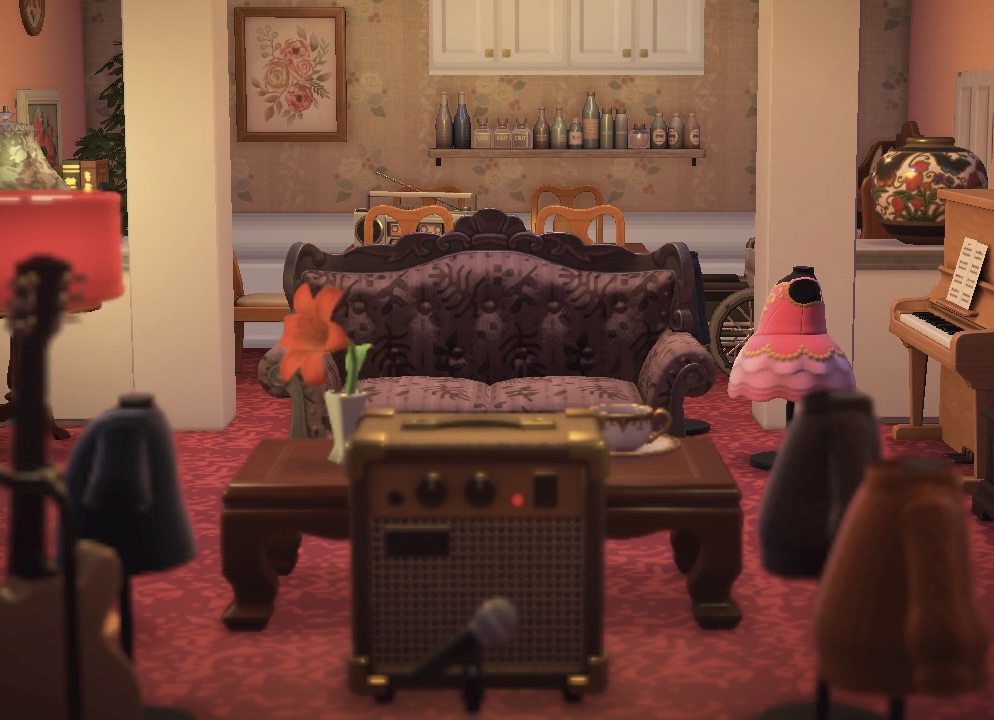
Caity’s house is another mishmash of sets from the show. The main room is the Roadhouse and Julie Cruise is performing on stage. Three Black Yukon Sucker Punches are sitting on the bar, but be warned, they sneak up on you. Behind the stage is the home of Harold Smith, an agoraphobic lonely soul, who raises orchids and makes out with teenage meals on wheels delivery girls. On the right of the Roadhouse is Laura Palmer’s room. Bob is in this one twice: once at the foot of her bed (sort of) and looking in her hiding place behind her dresser for her diary. I wanted to add so much more to this room, but Animal Crossing doesn’t allow a lot of items to be packed into a small area. The picture on her wall was given to her by Mrs. Tremond and her grandson. I’m particularly proud of that detail. To the left of the Roadhouse is Dr. Jacoby’s office where he’s speaking with Bobby about his relationship with Laura. ACNH made this one easy with the fish tank, 3D glasses, hula girl, palm tree, peacock chair, and Moroccan lights. So many fun details. There’s even Hawaiian music playing in the room. Upstairs is the Palmer’s living room, which is another room I’m crazy proud of. I tried to create a recognizable ashtray, but failed. The white horse from Sarah’s vision is present and Leland is about to be exposed as Bob in the mirror on the wall. Maddie is, uh…headed back to Missoula, Montana. Downstairs is the Hayward’s living room, with the tape recorder they used to listen to Laura’s messages to Dr. Jacoby. Leland’s dancing to “Get Happy” with Gersten accompanying on the piano and James is recording a falsetto ballad with Maddie and Donna singing backup.
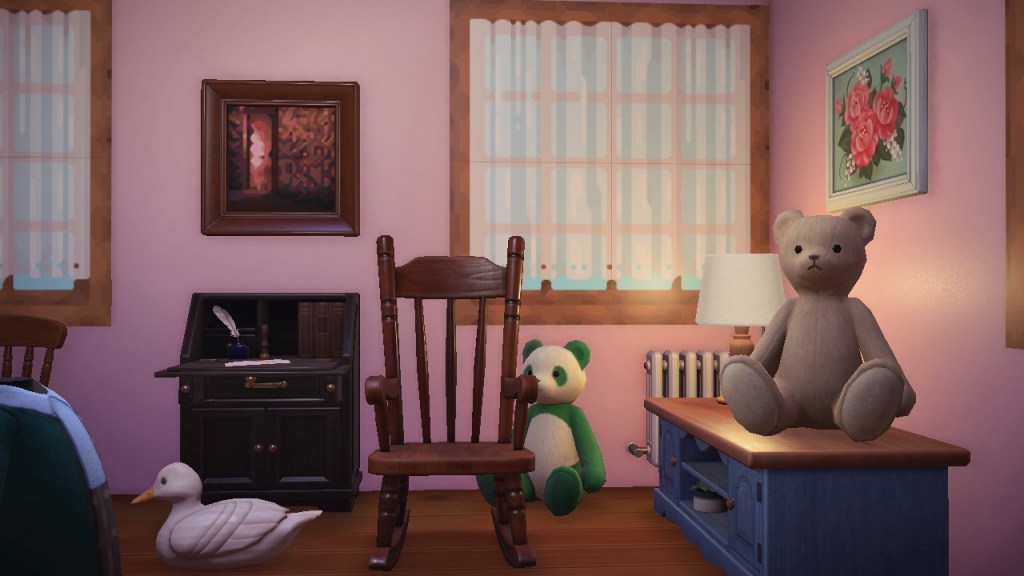
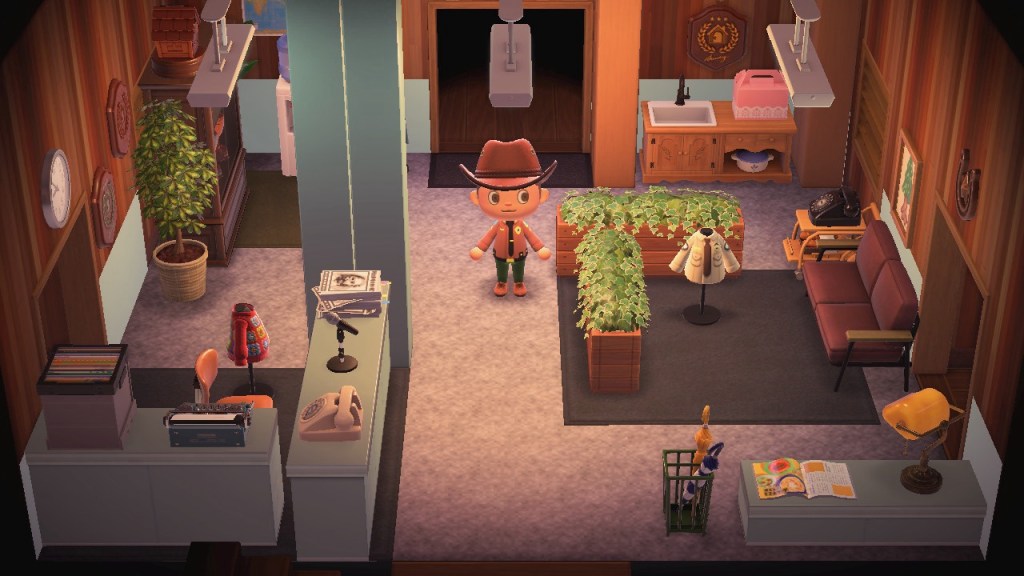
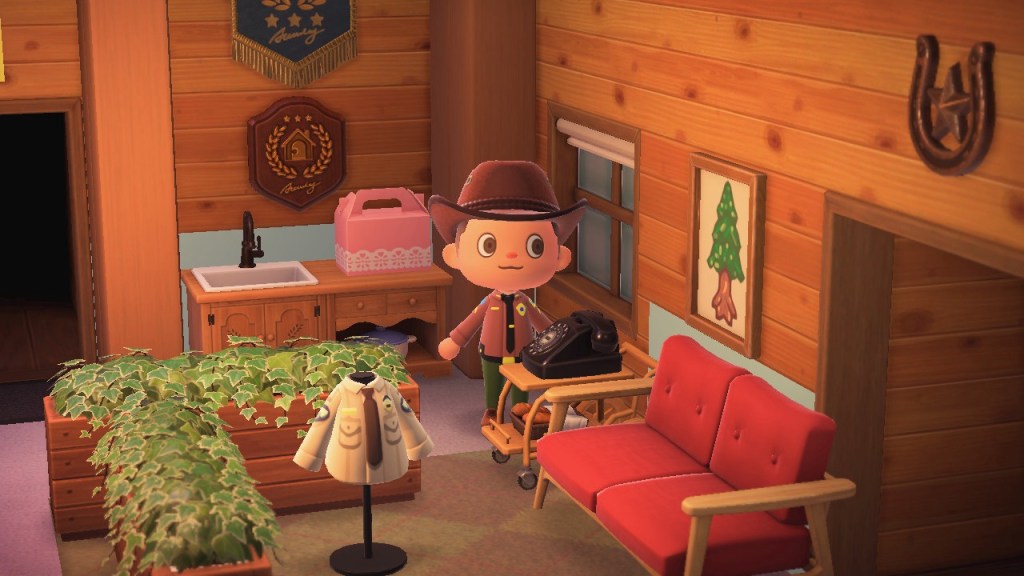
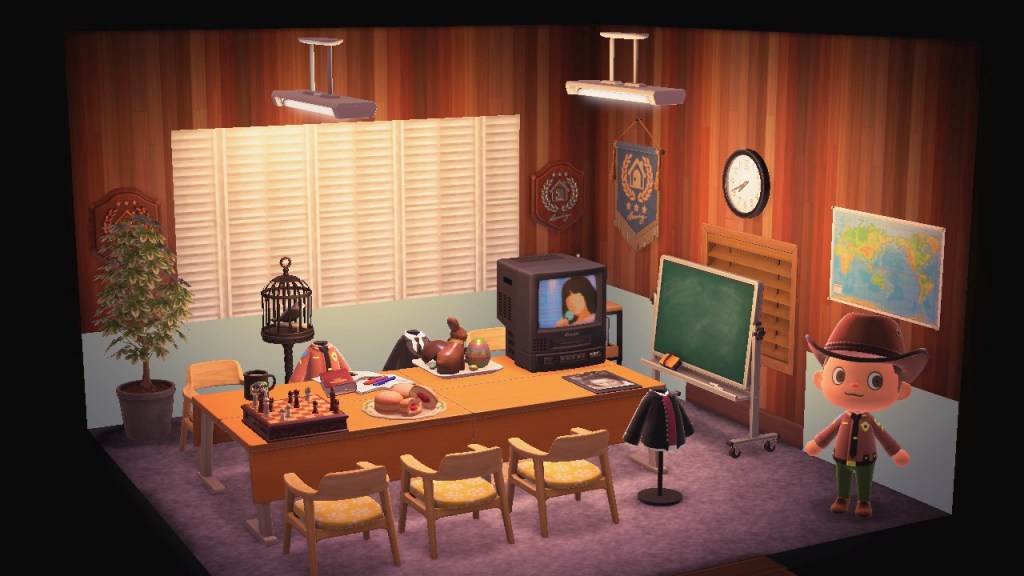
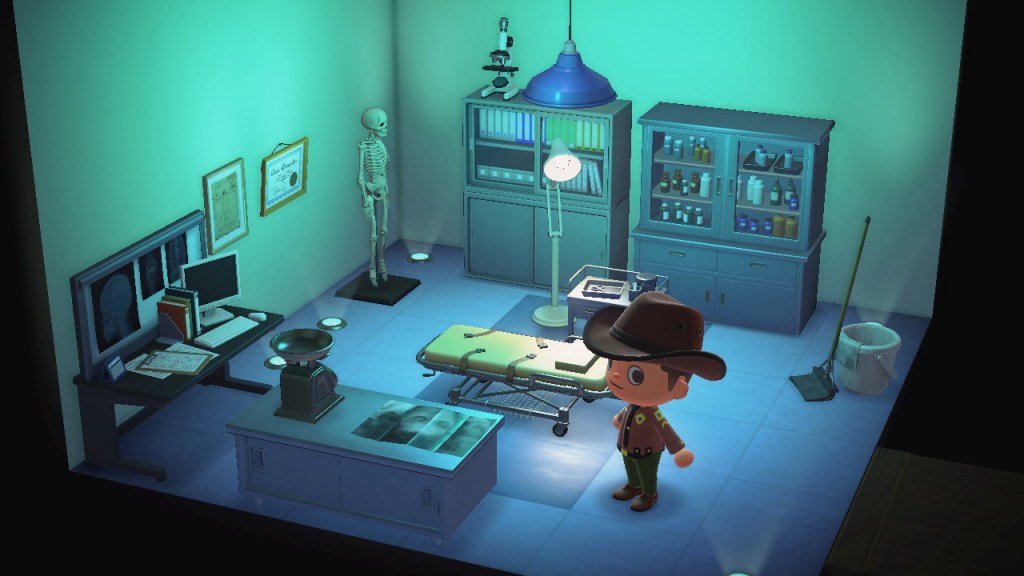
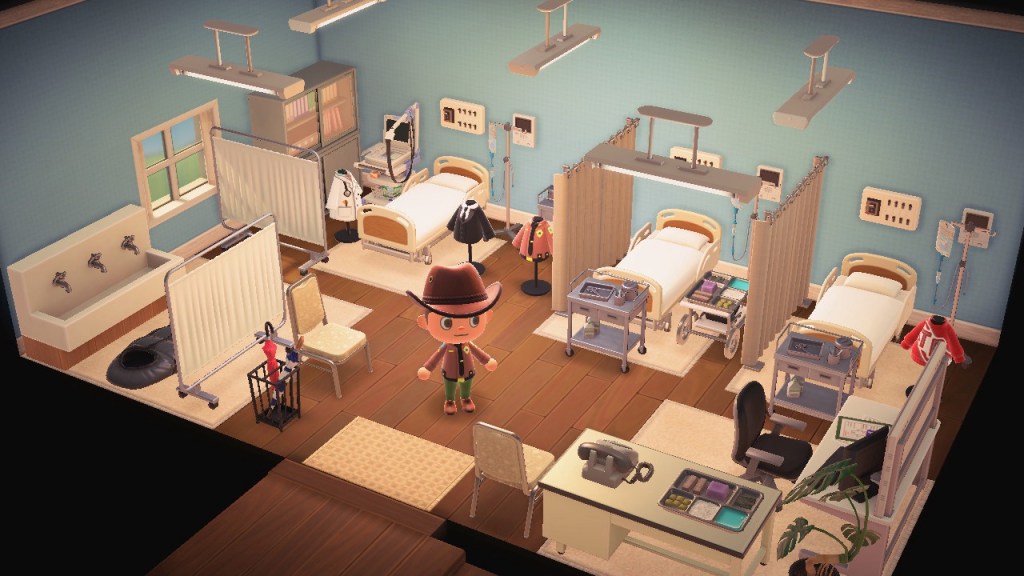
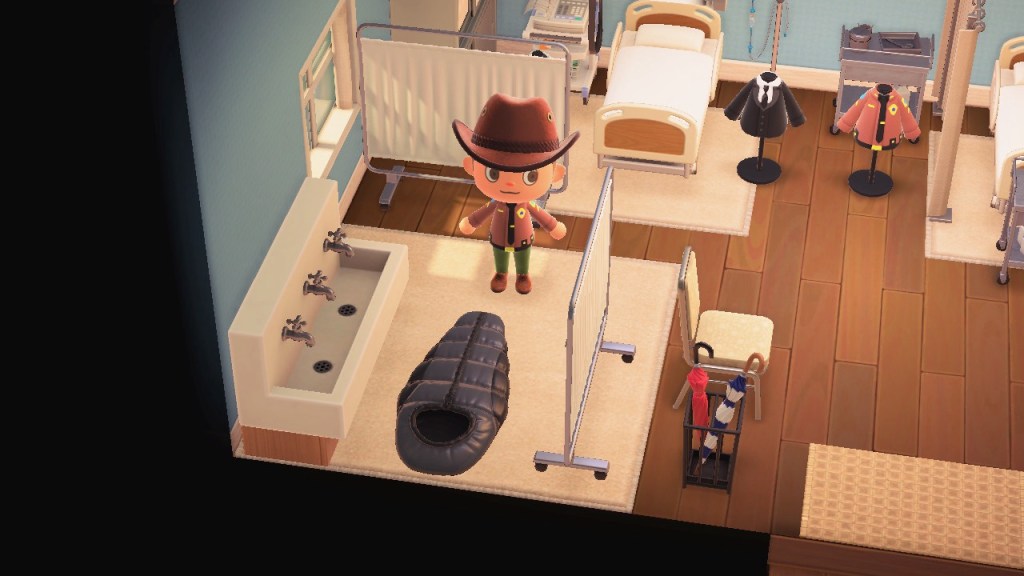
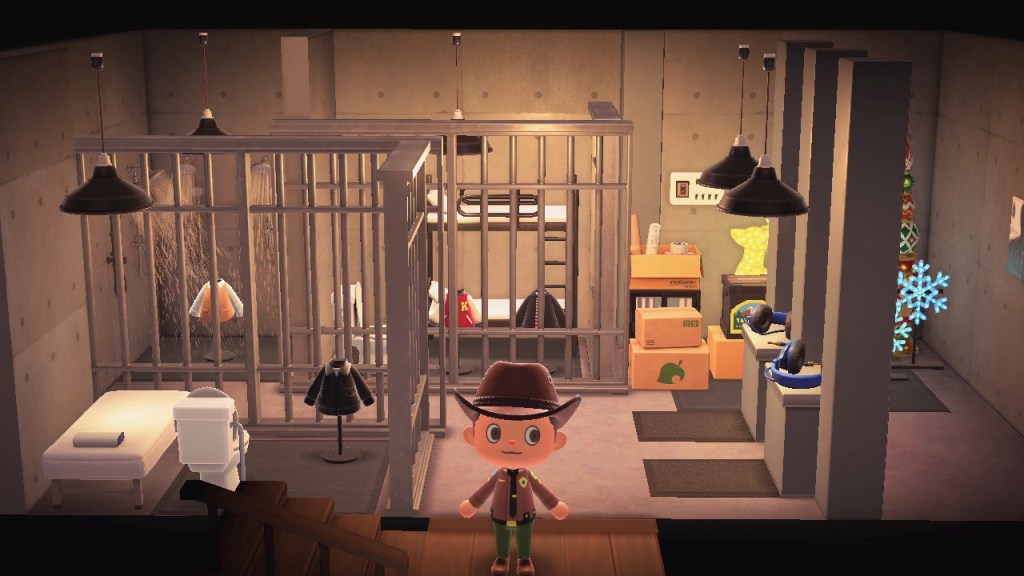
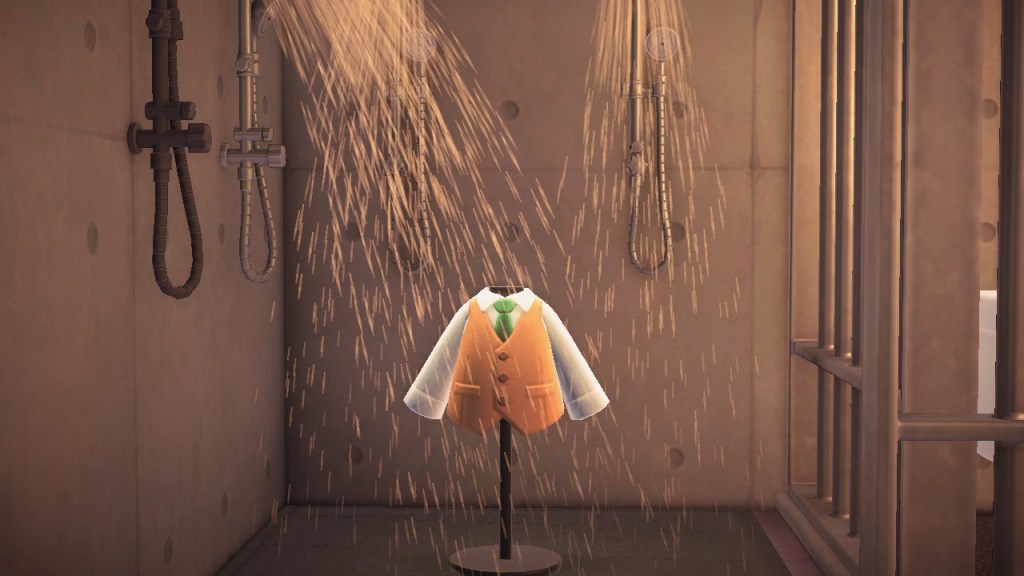
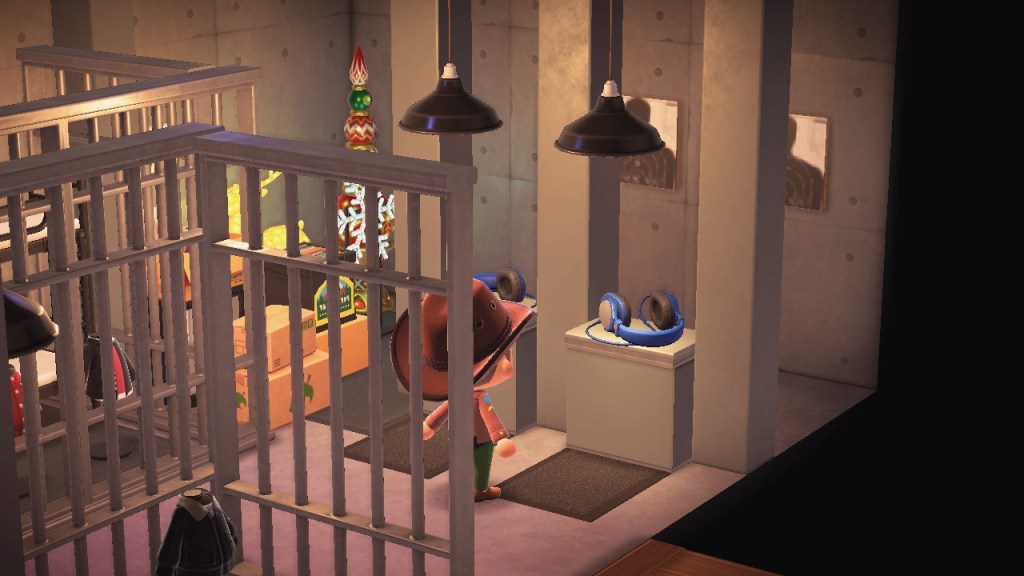
The Twin Peaks Sheriff’s Department (Harry’s house) is post-remodeling (the glass walls were shown being removed after the pilot episode) and Lucy’s at her desk, transferring a call from Pete Martell to Harry on the black phone, not the brown one. Behind that room is the conference room where Cooper is showing Bobby Briggs the video of Laura’s picnic with James and Donna. Her diary is on the table along with a small chocolate bunny. If you know, you know. A chess game with Windom Earle is underway and Waldo’s birdcage is dangerously close to the window. The room on the right is a blend of Jacques’s cabin from the series and FWWM. The birds sing a pretty song and there’s always music in the air. On the left, you’ll find the morgue where Laura spent most of the day on February 24th. Upstairs is the hospital, which hasn’t seen this much activity in years. Nadine’s in a coma, Pete Martell is suffering from smoke inhalation (and turning away his hospital food,) and Ronette doesn’t know where she is or if she is. There’s a man in a smiling bag in the washroom. Downstairs is the basement of the Sheriff’s department where target practice is set up near the storage area. Mike and Bobby are in a holding cell, barking at James across the aisle, and Bob/Leland is reciting a scary poem after Dick accidentally set off the smoke alarm.
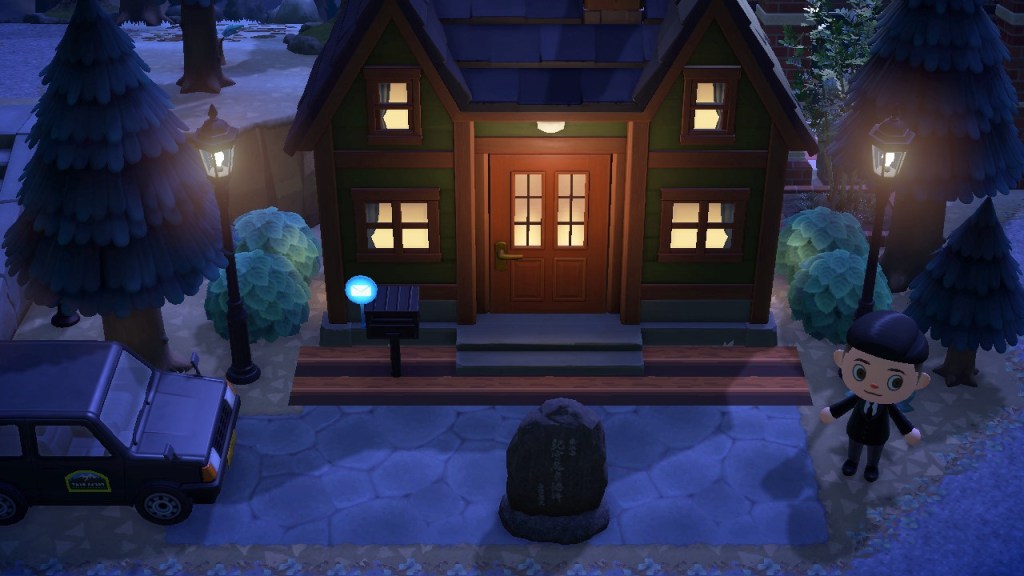
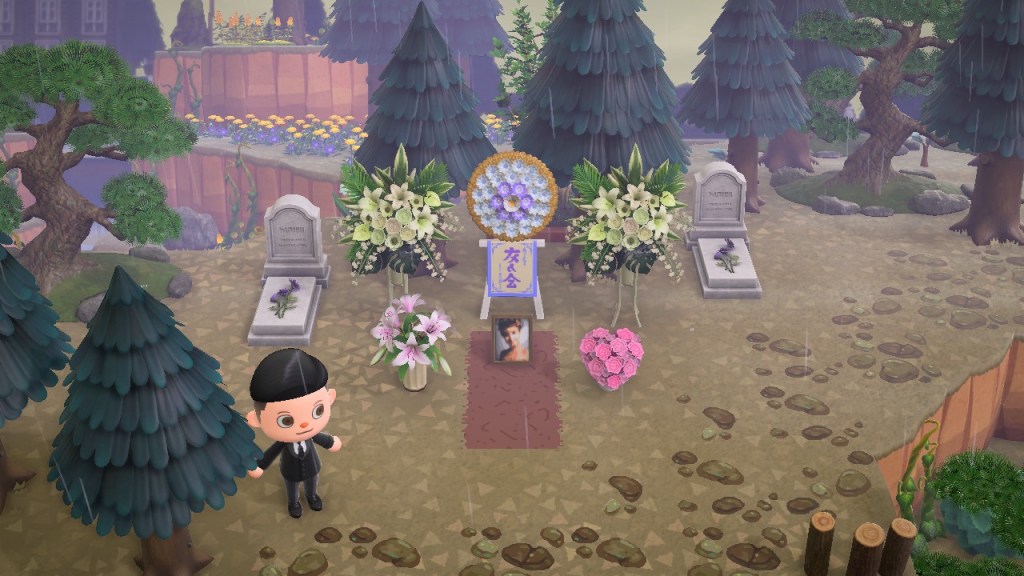
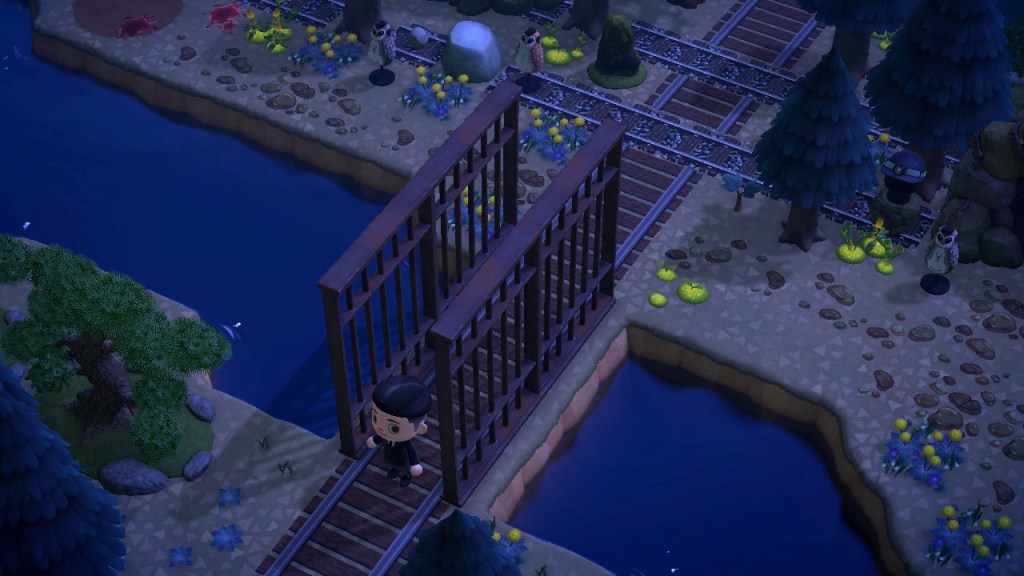
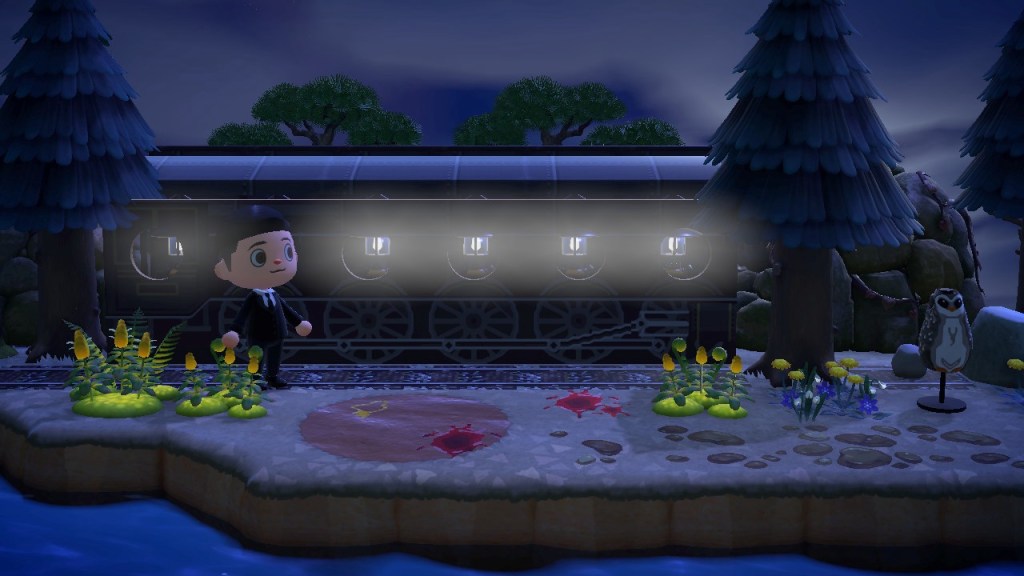
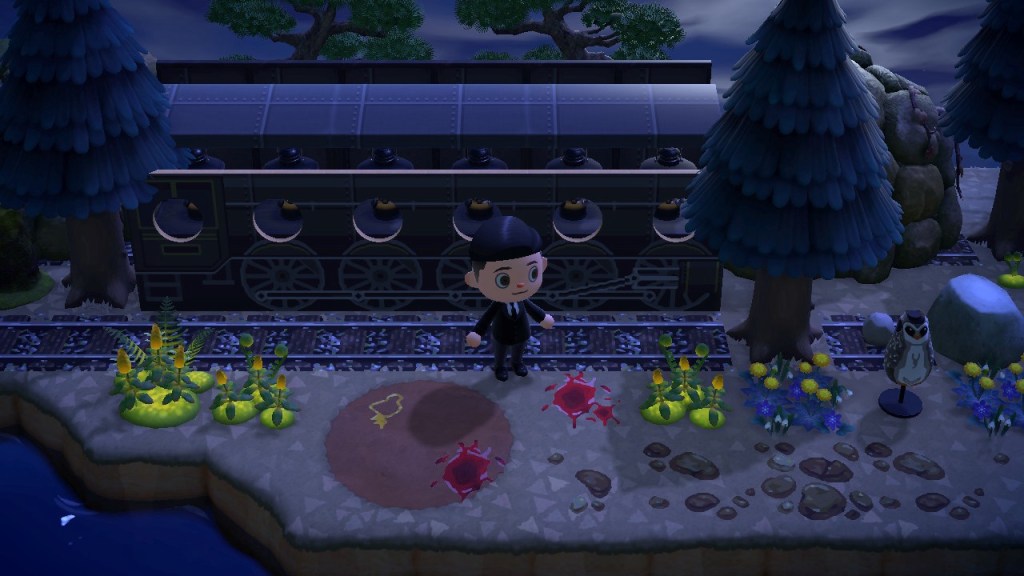
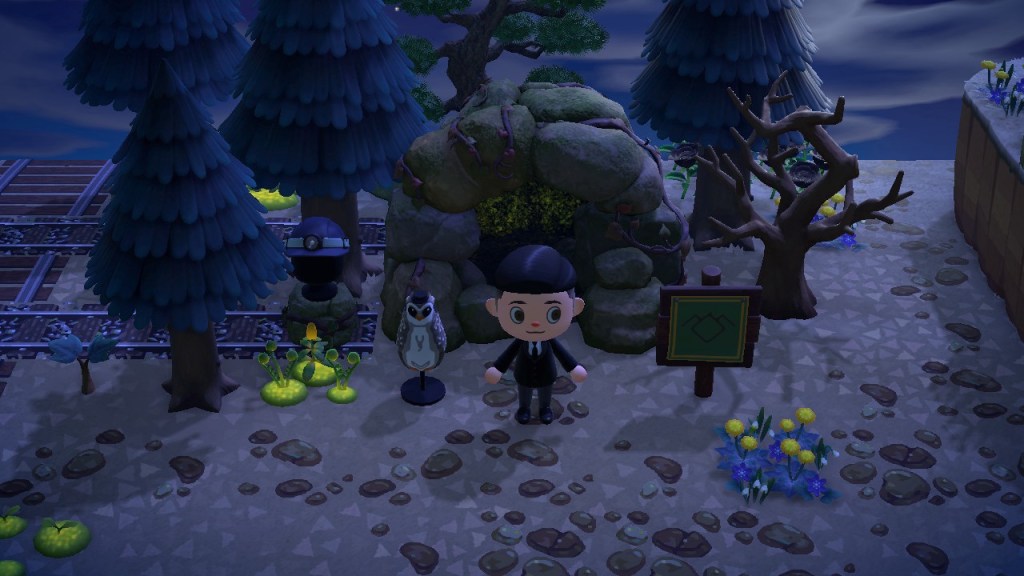
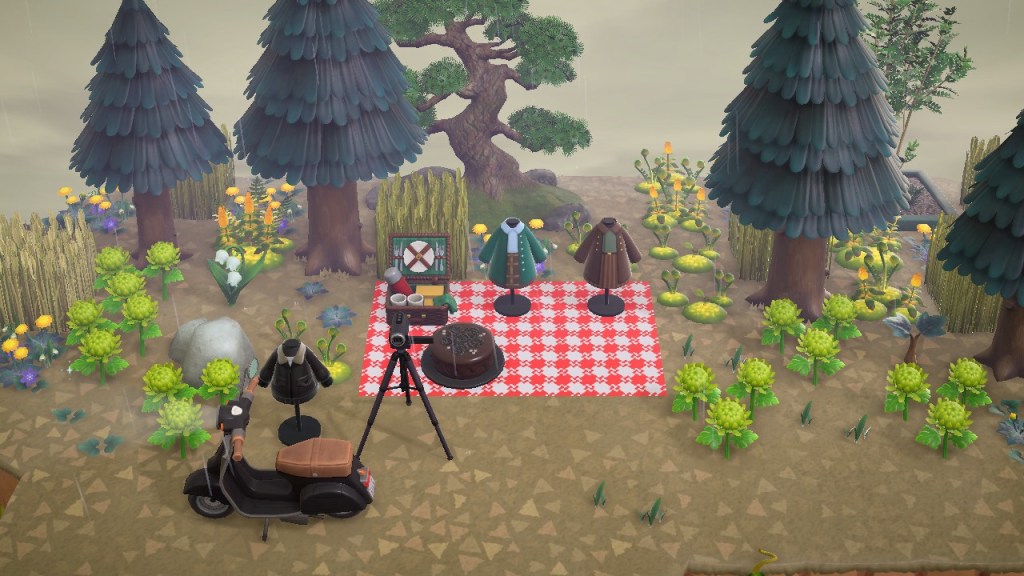
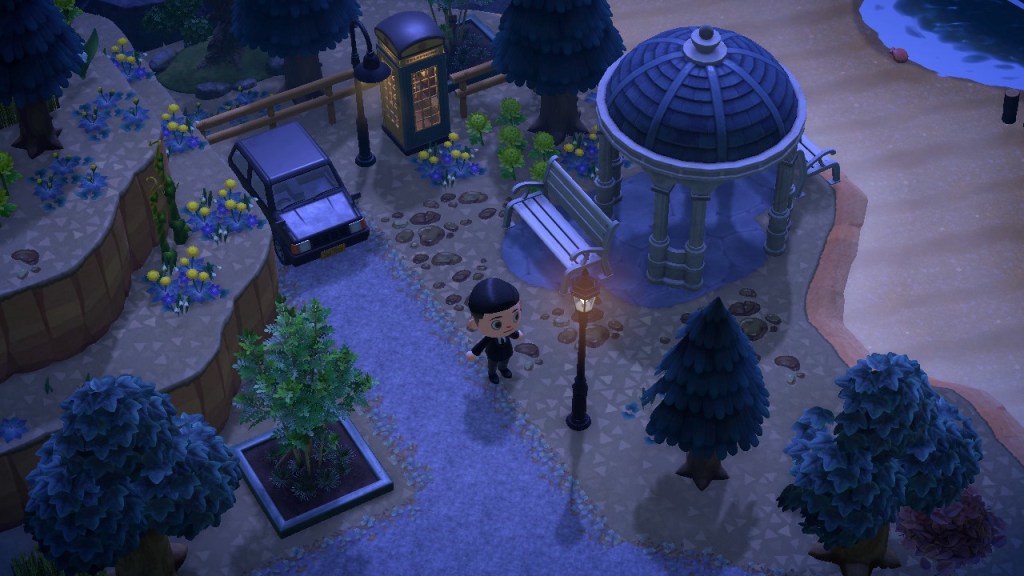
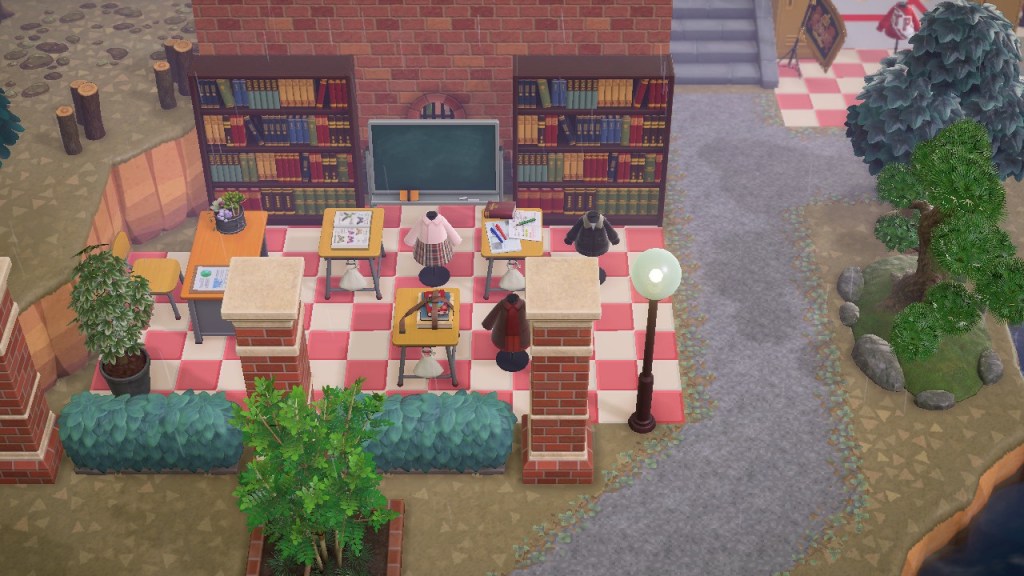
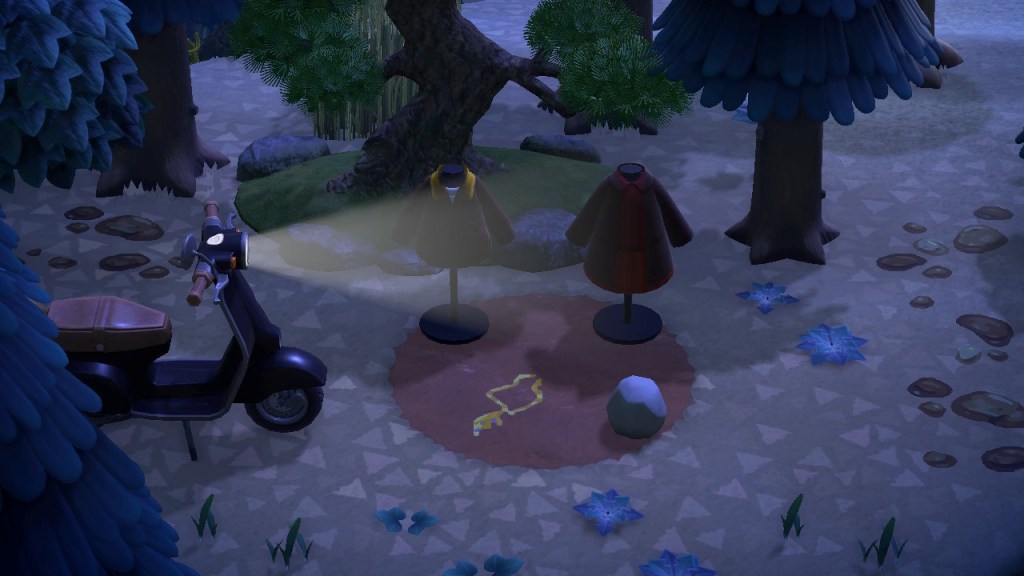
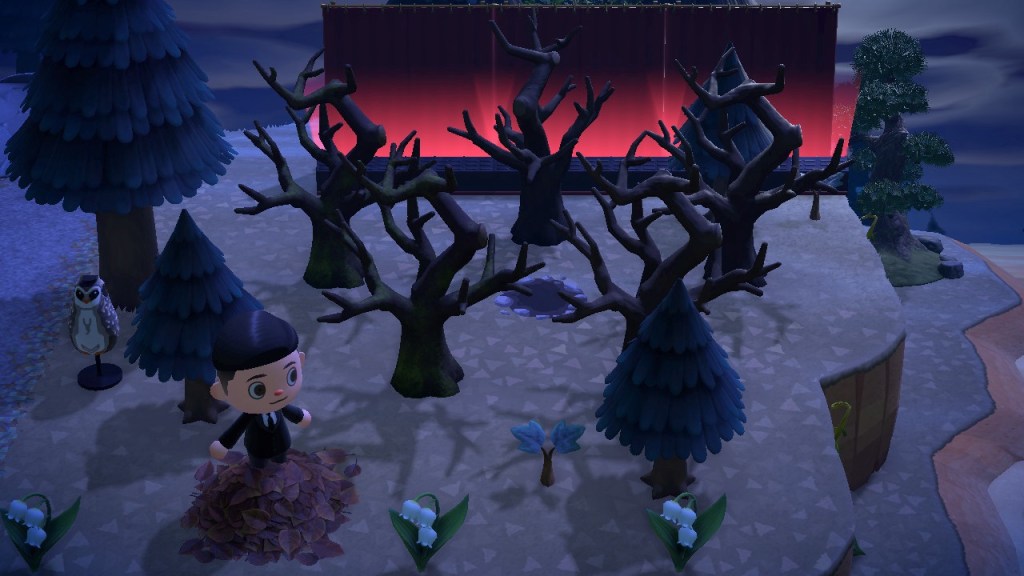
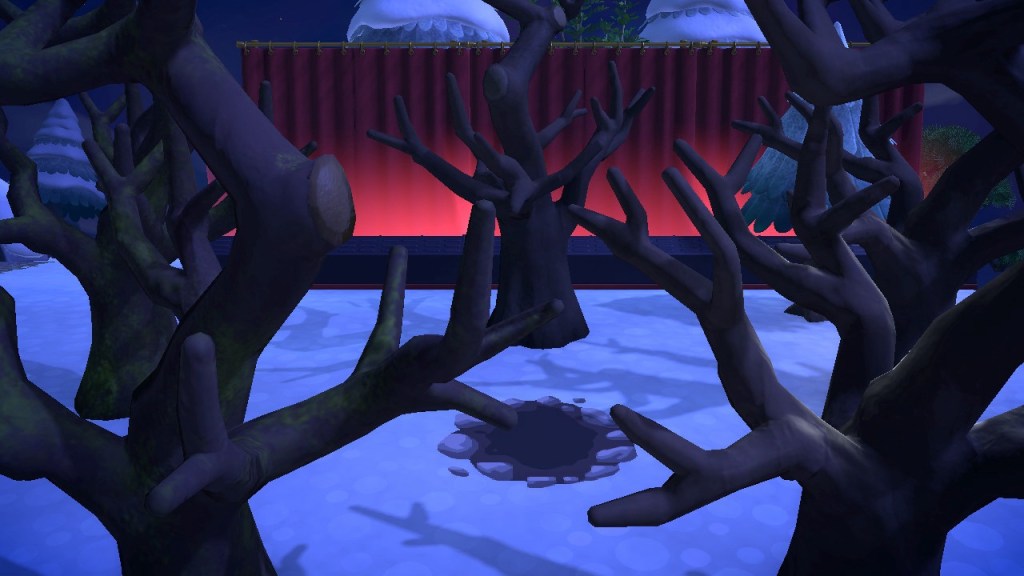
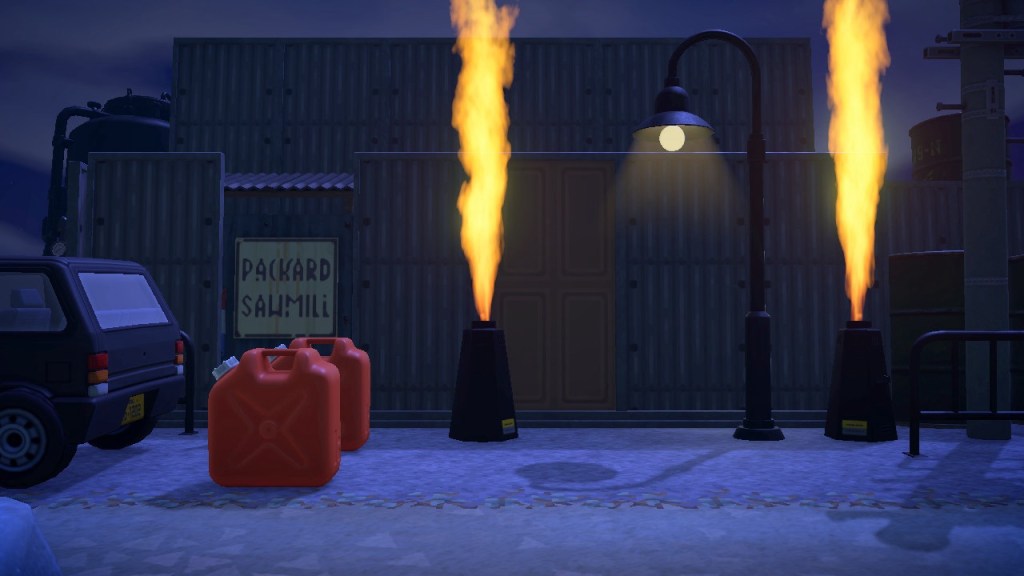
A lengthy, wordy tour of the rest of the island, starting from the top: Harriet’s bike is parked outside the Roadhouse just southwest of the Great Northern. Southeast of the hotel is the cemetery where Laura is buried. Beyond the cemetery is the railway bridge that Ronette Pulaski walked across on her way back across state lines on February 24th. Crossing the bridge, you’ll find yourself at the abandoned train car where Laura was tortured and killed. Her necklace is placed on a bloody mound of dirt and (as Margaret said) the owls are silent. Owl Cave is east of the crime scene, and James, Laura, and Donna are filming their picnic on the hill east of that. Behind the picnic hill is the rocky beach where Laura’s body was found by Pete “the Poodle” Martell. The gazebo at Easter Park where James and Donna film Maddie dressed as Laura sits on the far northeast corner of the island. Follow the road west of that, cross the bridge, and you’ll find Twin Peaks High School, where Audrey, James, and Donna are sitting in class listening to the principal announce the news of Laura’s death. South of the gazebo is the rise where Jacques cabin is built. James and Donna are burying his half of Laura’s necklace under a rock in the trees, and the scorched engine oil pool in Glastonbury Grove waits to the south. Below that rise, Mike and Bobby meet Leo Johnson for a drug exchange. Too bad Laura went and checked out on them before they could get her share of the money. Heading west across the river and past the Sheriff’s Department, Agent Cooper conducts an experiment from a dream he had. Further West, Agent Cooper, Doc Haywood, Deputy Hawk, and Sheriff Truman are late for tea at the Log Lady’s house. Her husband’s ashes are on the mantel behind them. North of her house is Shelly and Leo’s place, still undergoing renovations even though Leo is incapacitated. Cooper and Major Briggs are camping just west of the Johnson house. Cross the bridge to the south, where Leo just set fire to the Packard Sawmill. Below that is Mrs. Tremond’s living room. Her grandson is studying magic and she requested NO creamed corn in her meal on wheels. Oh, and in the woods behind Bob’s house, Laura and Audrey are smiling for a picture that will be displayed on Ben Horne’s desk at the Great Northern.
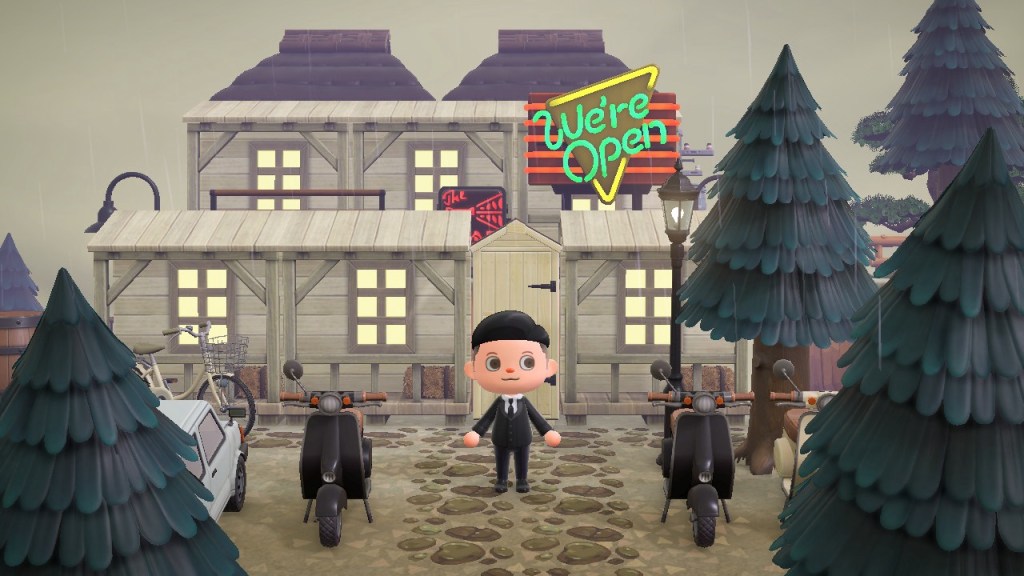
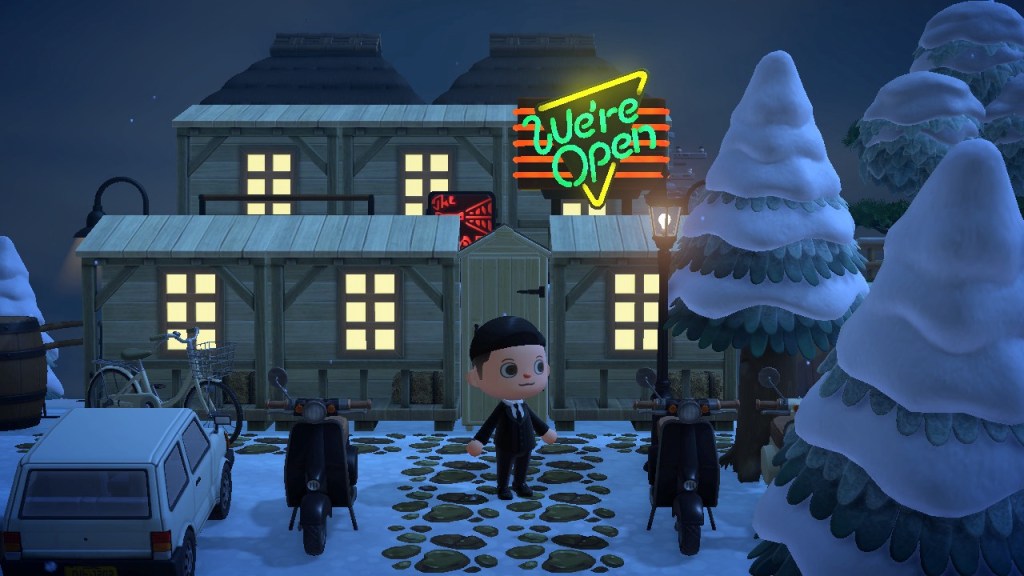
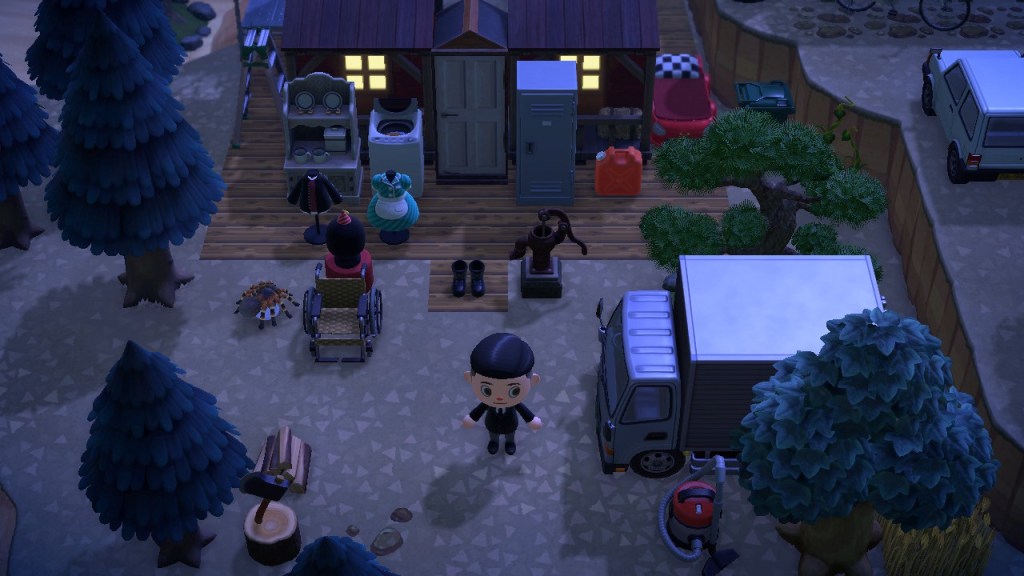
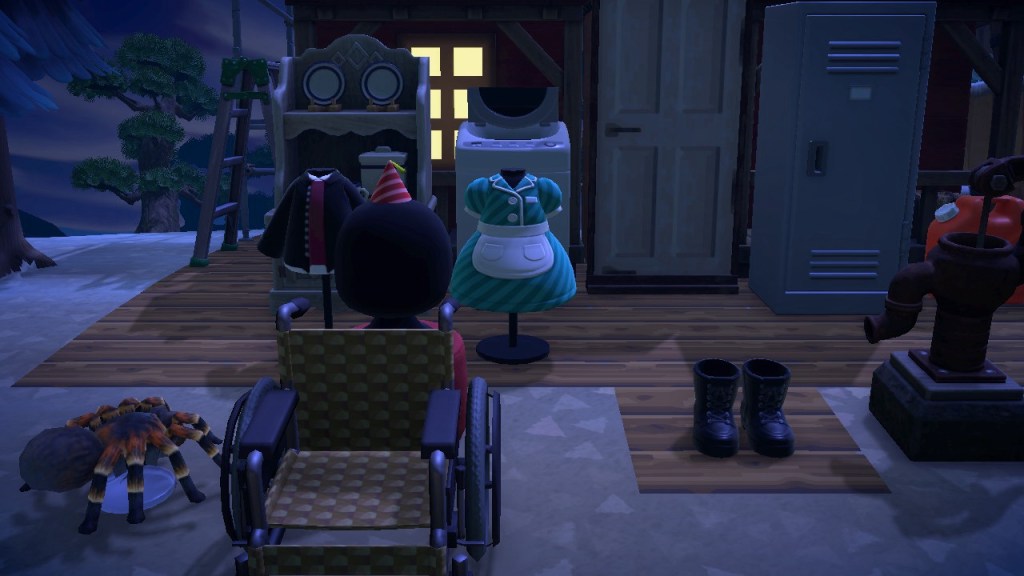
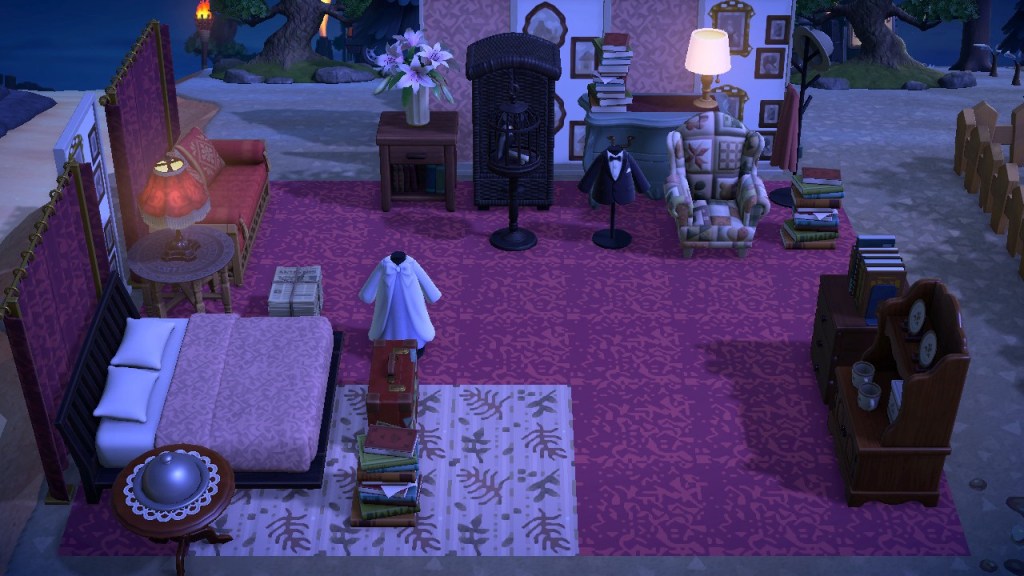
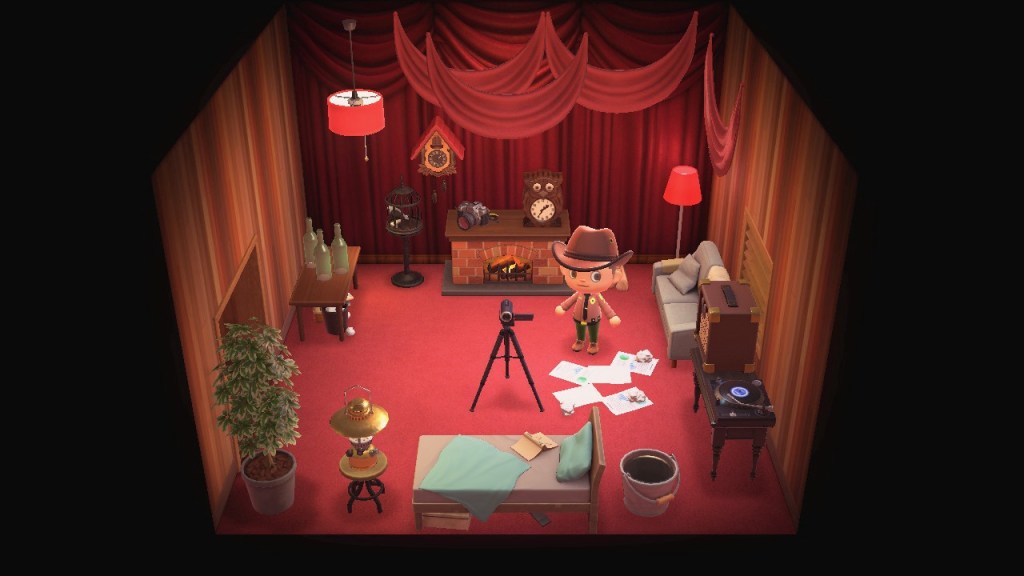
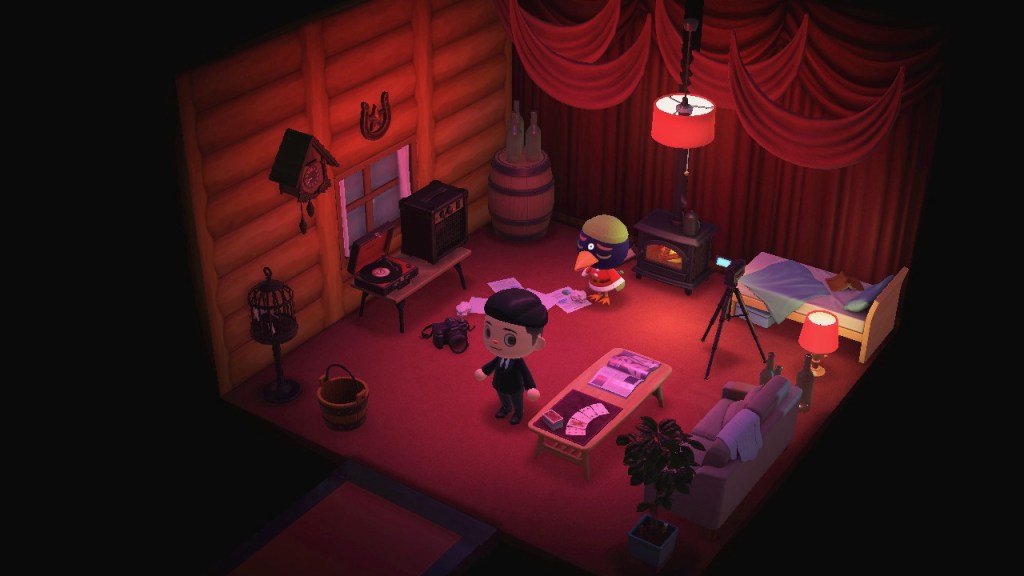
Jacques Renault’s cabin (Jacques’s house) is a mixture of the sets from season one and Fire Walk With Me. Waldo, the record player, and the camera are all there, as is the dirty mattress where Leo tells Laura to “bite the bullet, baby.” If you turn up the volume, there’s always music in the air.
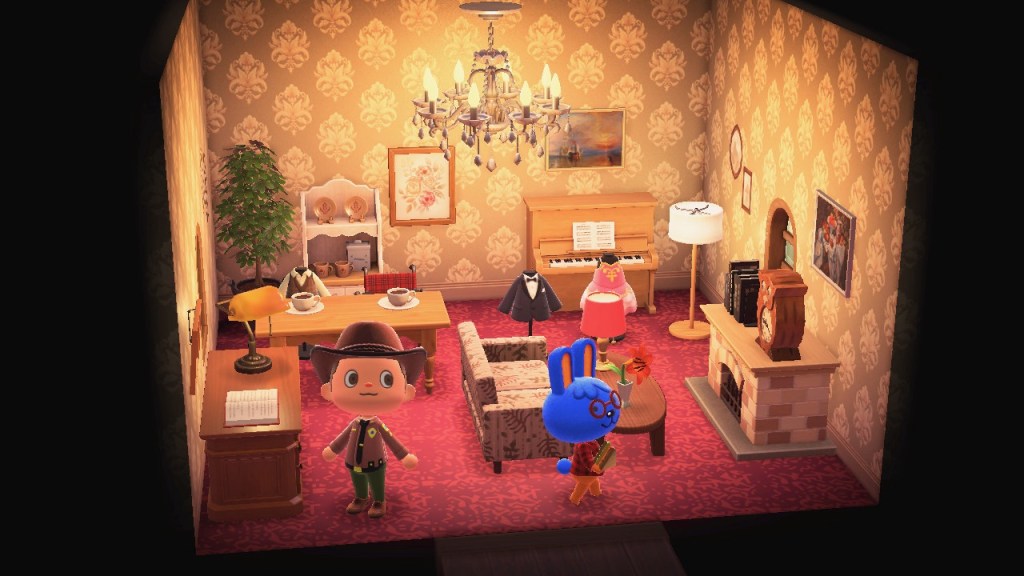
The Hayward’s house (Doc’s house) is a smaller version of the bottom floor of Caity’s house. Eileen and Will are hosting dinner with the Palmers and Leland is dancing to “Get Happy.”
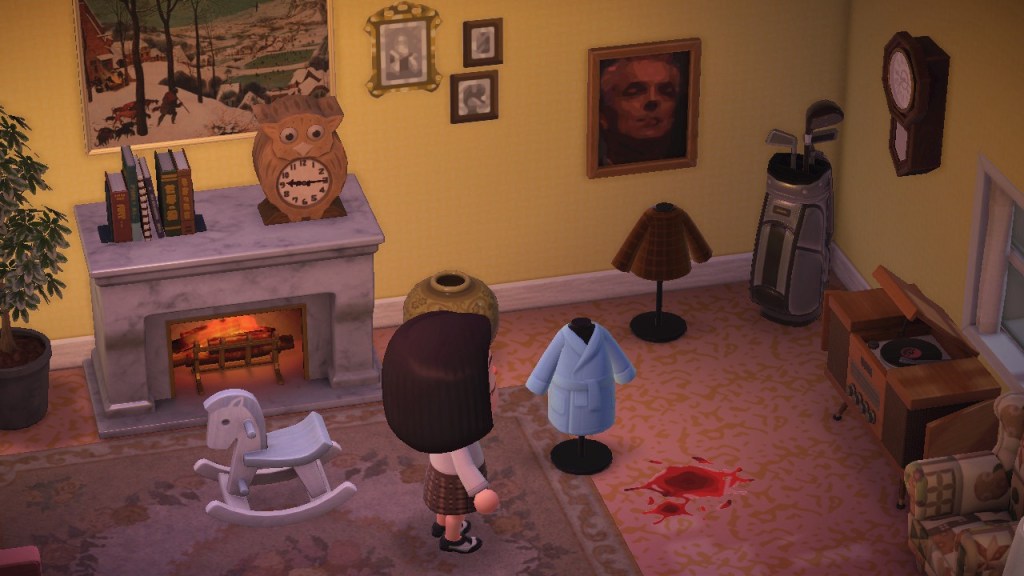
The Palmer’s house (Maddie’s house) is about to be the scene of a murder. Bob checks his reflection in the mirror and Sara has another vision of a white horse. Maddie wasn’t killed in her blue bathrobe, of course, but she had a vision of blood on the carpet while she was wearing it a few days prior.
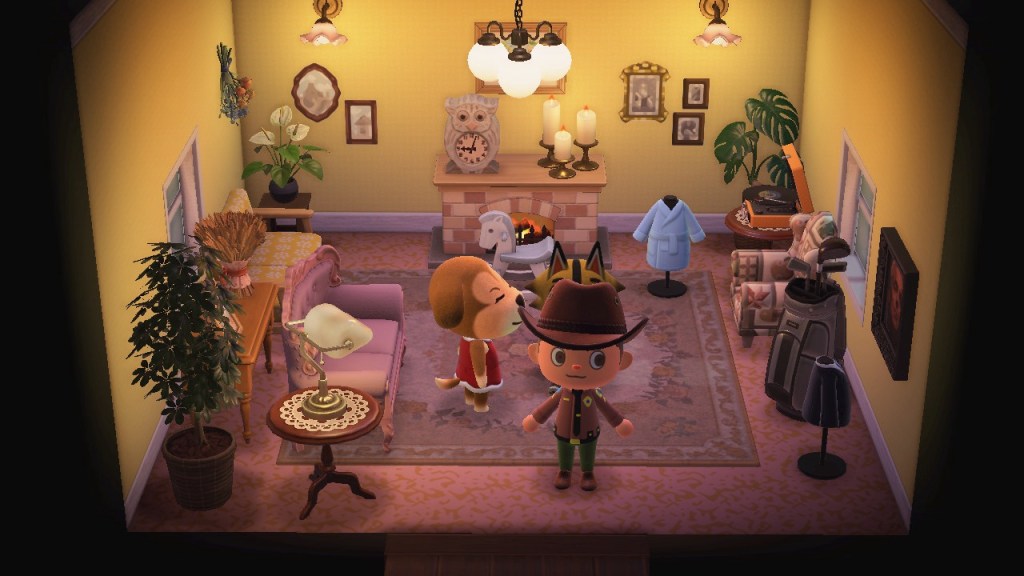
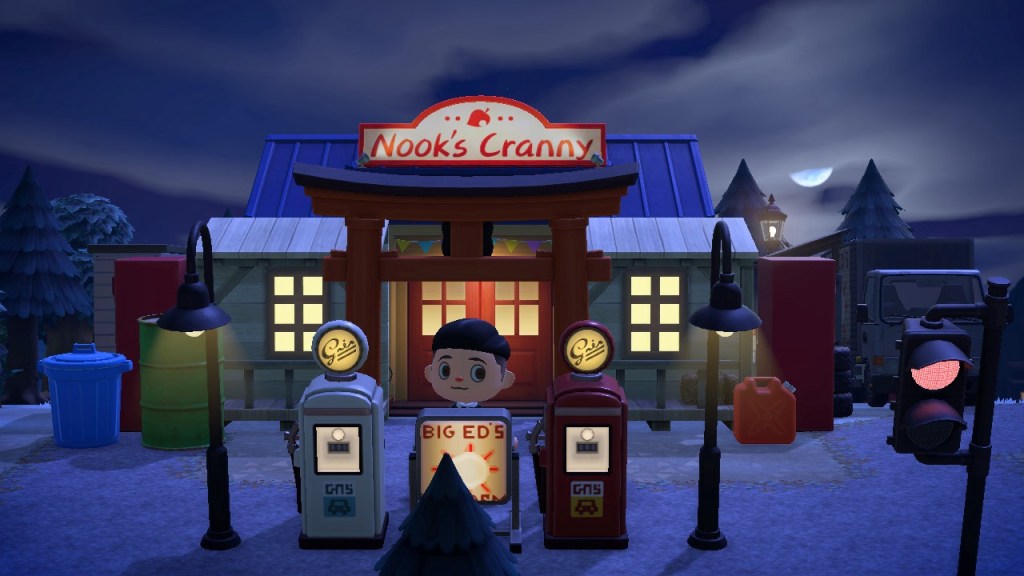
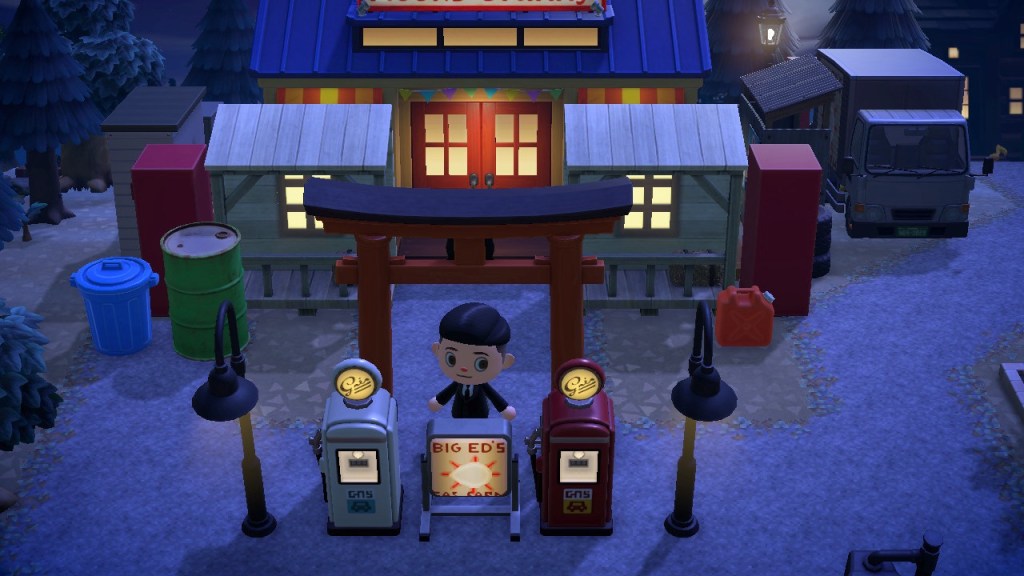
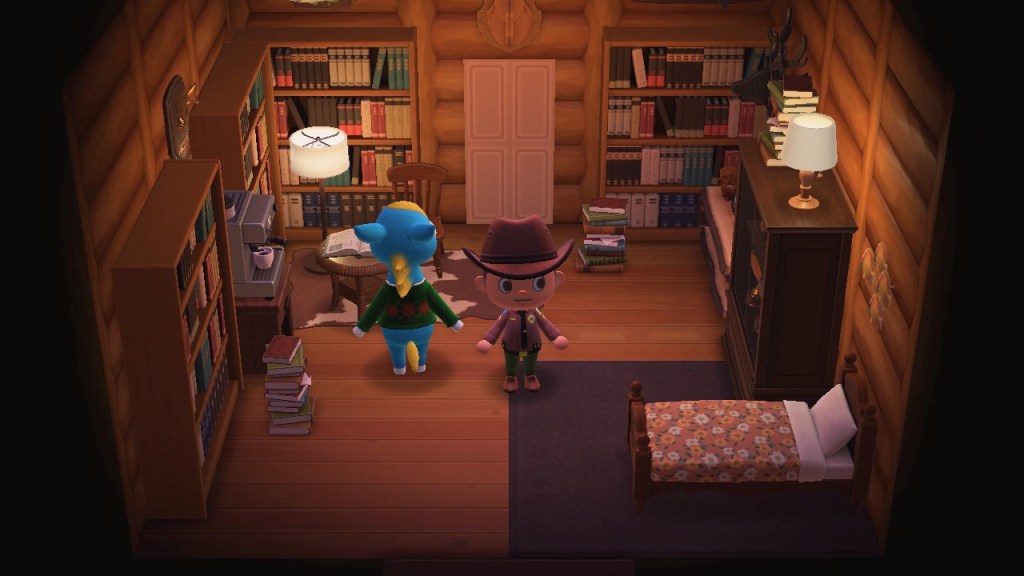
The Bookhouse (Ed’s house) is tucked behind the museum. I struggled to choose between Ed’s house being the Bookhouse, which needed a villager house, and Big Ed’s Gas Farm. It was much easier to make Nook’s Cranny look like the exterior of Big Ed’s and turn Ed’s house into the Bookhouse. The bed where Audrey sleeps off her drug overdose–“heroin, Harry, THIS close to a lethal dose”–is in the corner. You can’t see her here, but her dad says she looks like an angel.
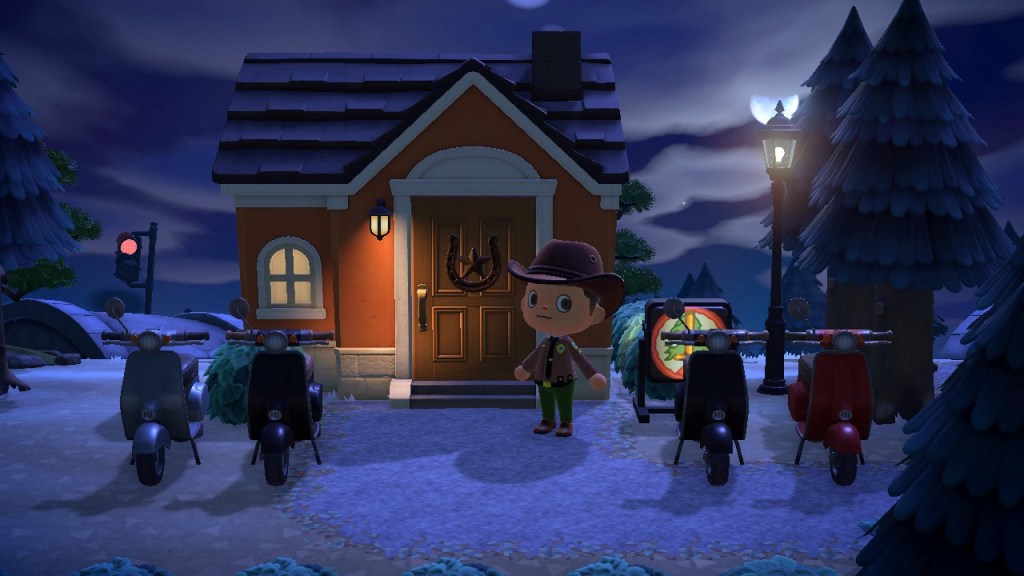
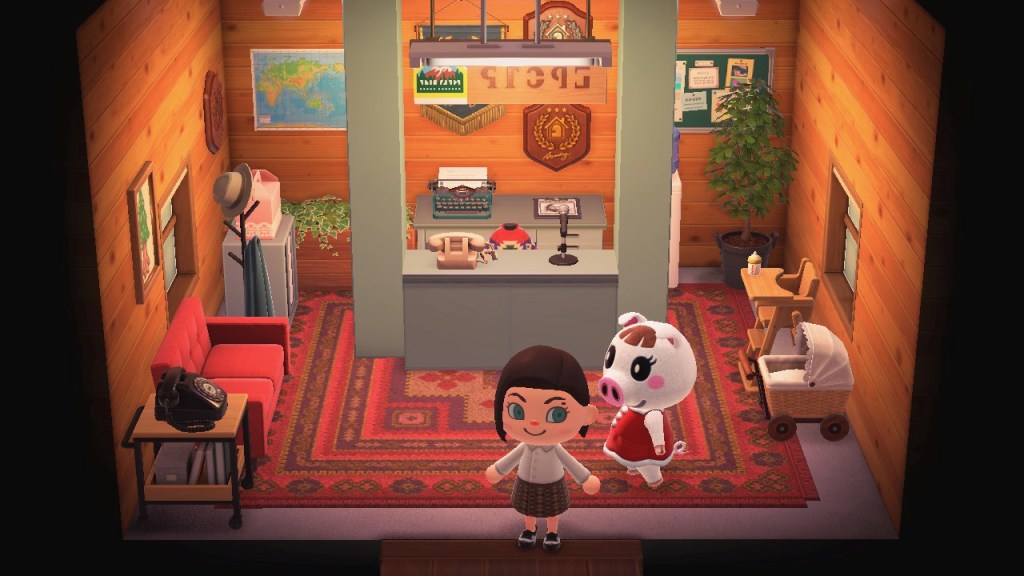
TPSD (Lucy’s house)looks just like the Sheriff’s Department with a few additions for the baby. A sketch of Bob is behind her desk, there’s a box of donuts waiting for Cooper, and the essential pine tree painting is hanging on the wall.
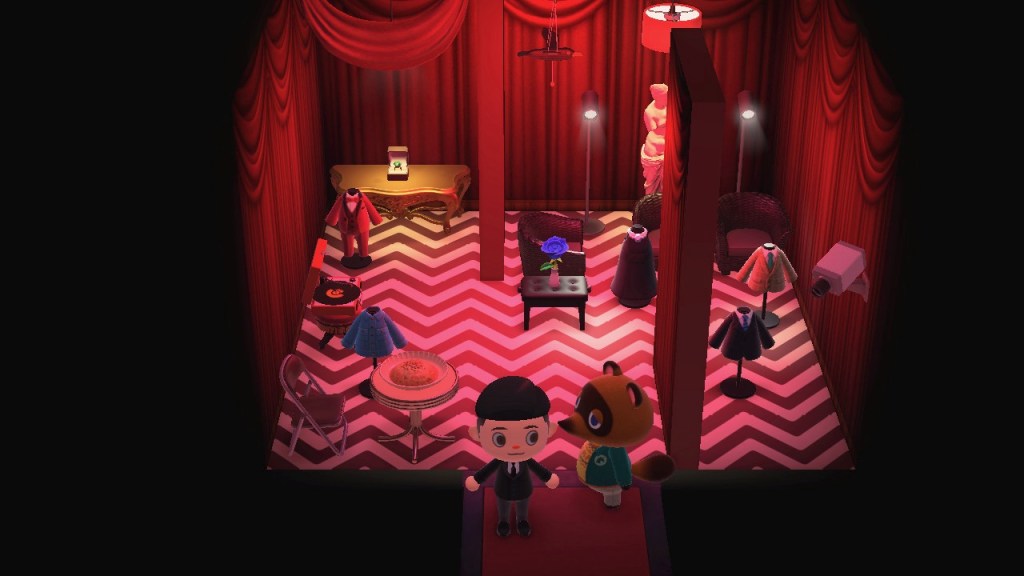
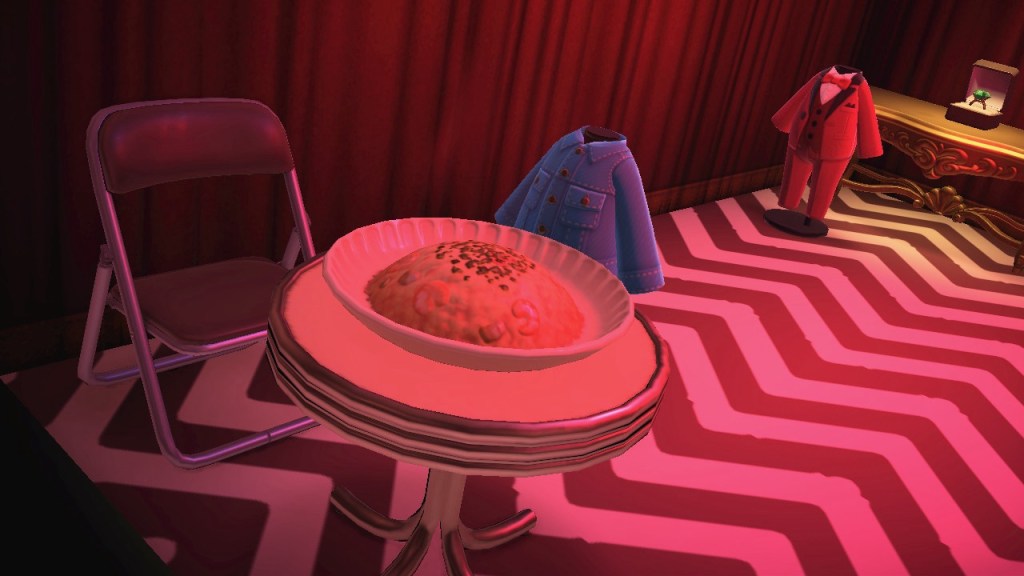
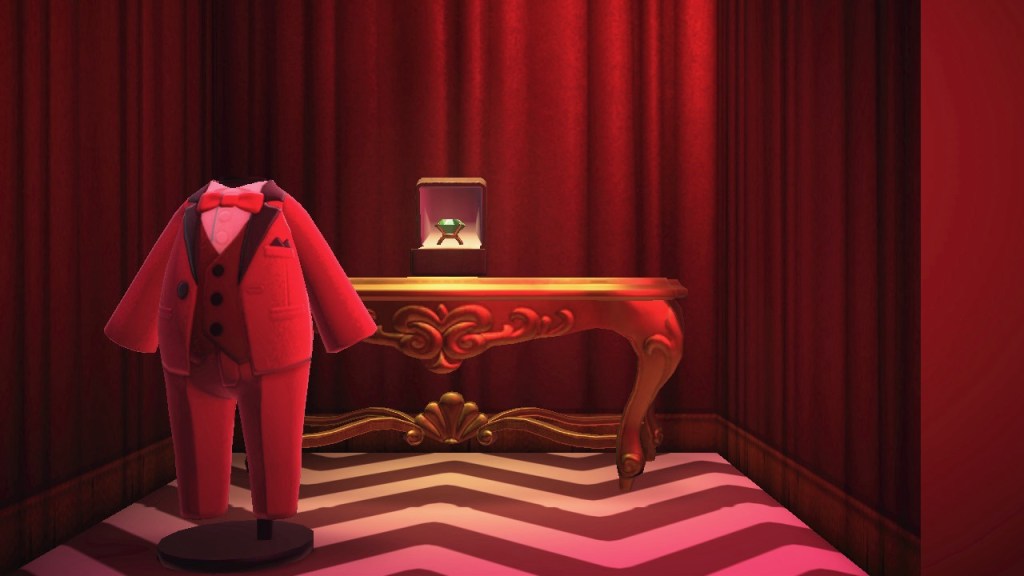
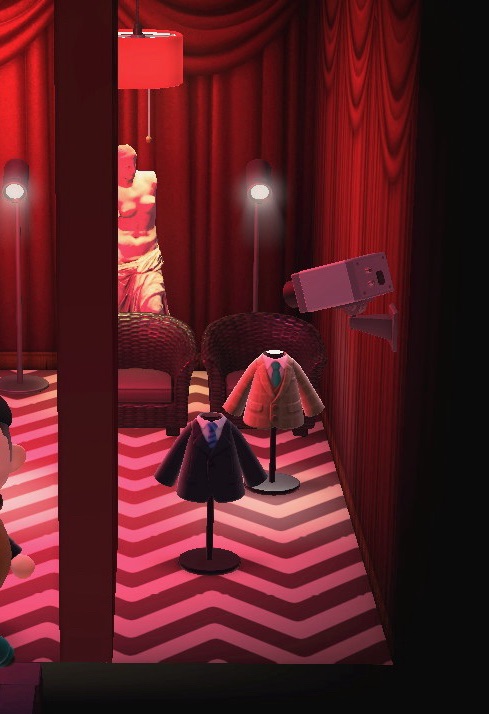
The Black Lodge (Judy’s house) is several little tableaus in one. Bob sits in front of a plate of garmonbozia on a formica table (green is its color,) the Arm shows Cooper the Owl Ring, and Agent Philip Jeffries shows up in the surveillance video behind Cooper. We’re not gonna talk about Judy.
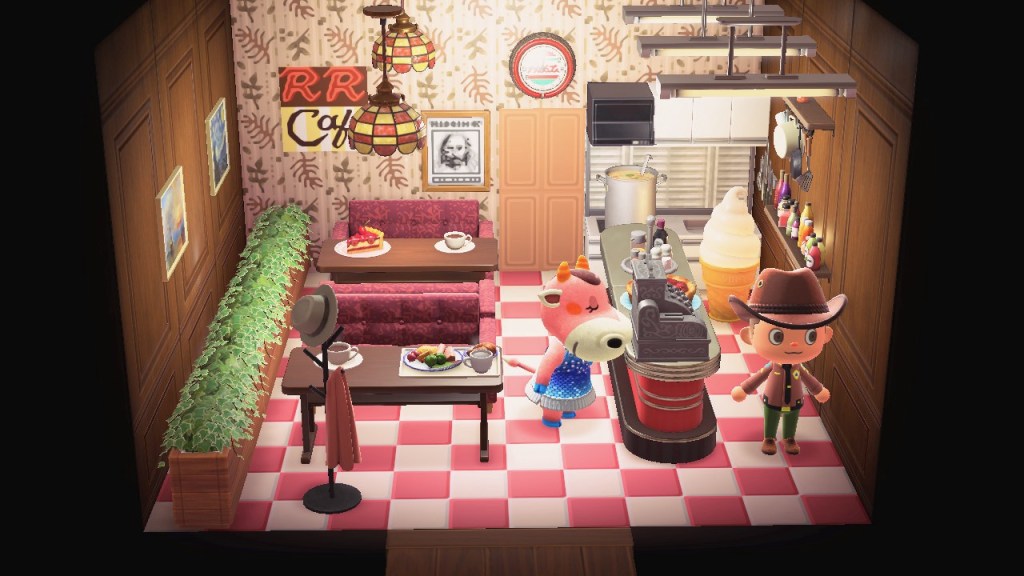
The Double R Diner (Norma’s house) is a mini version of the upper floor of Cooper’s house. Wood paneled walls and custom wallpaper are accented with a checkered tile floor. The ice cream cone light behind the counter was too perfect to leave out, even in the smaller version of the diner.
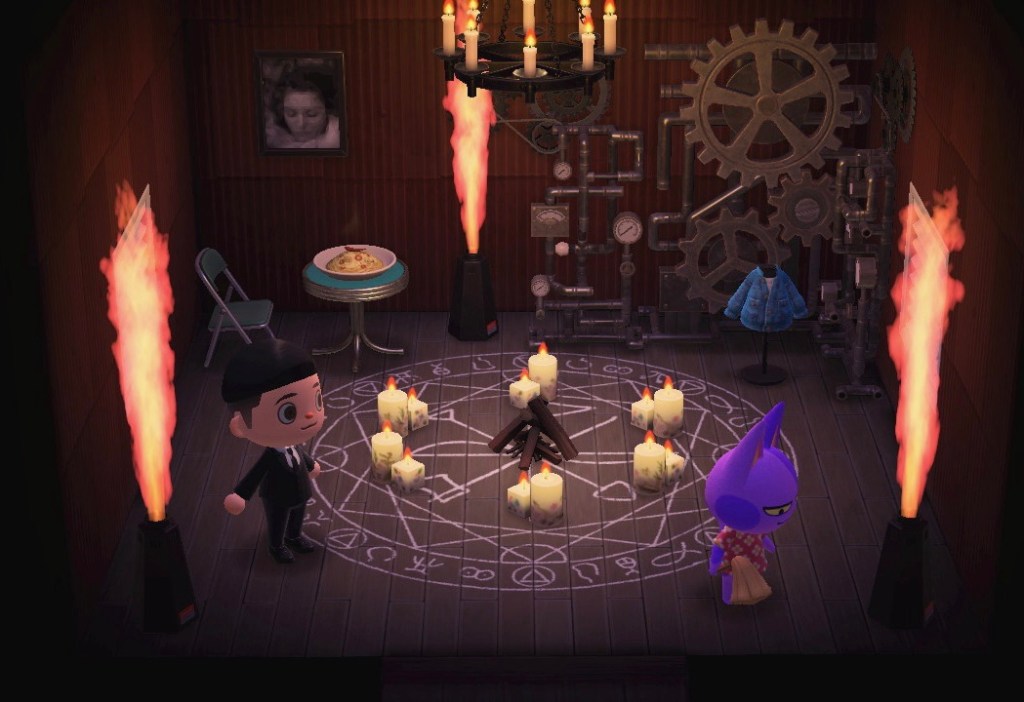
Bob’s house is creepy as hell, in sharp contrast with the adorable Bob villager. I felt bad putting him in that kind of place, but he seems to love it. He’s always dusting, cooking, or snoozing happily amongst the flames.
Leland’s office (Ray’s house) is a scene created with elements of Ben Horne’s office and other parts of the Great Northern. There’s a ridiculous smorgasbord set out for the Norwegians and the Ghostwood Estate papers are on the coffee table, ready to be signed.
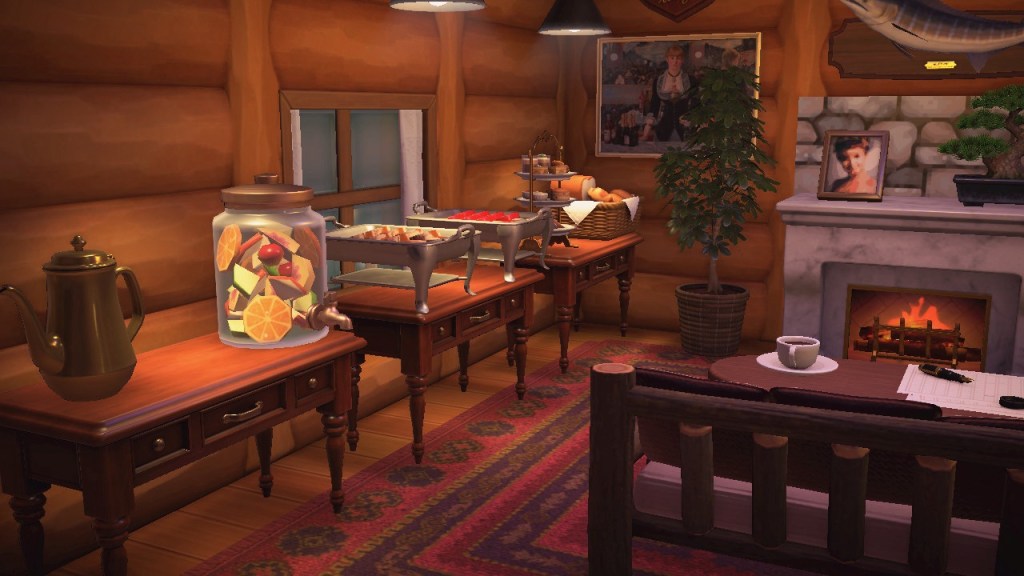
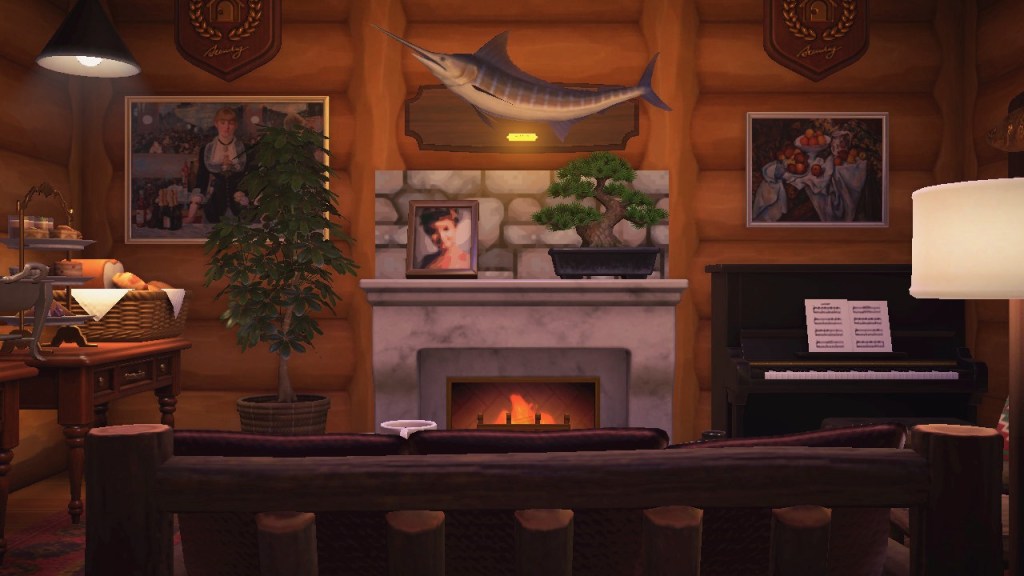
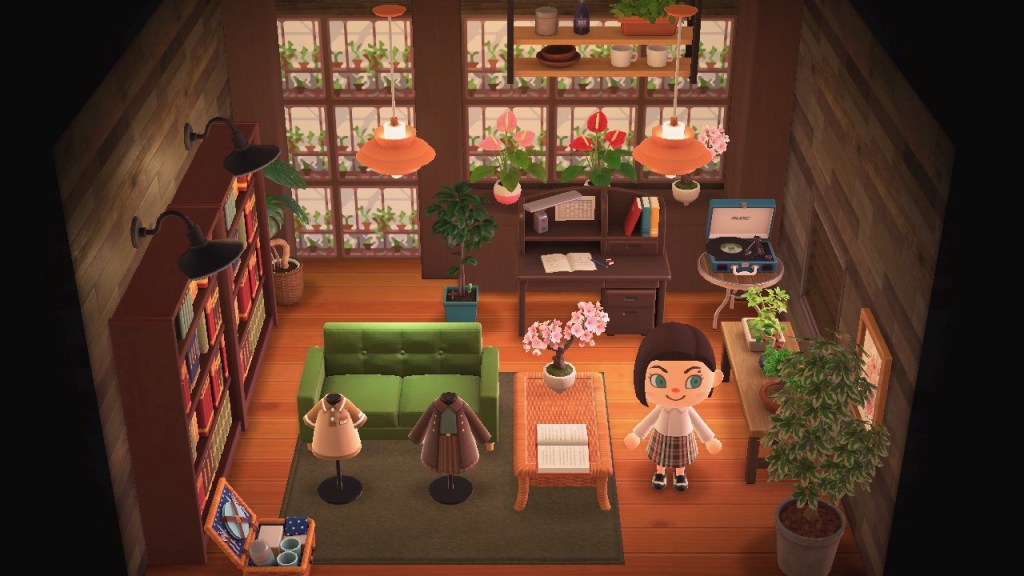
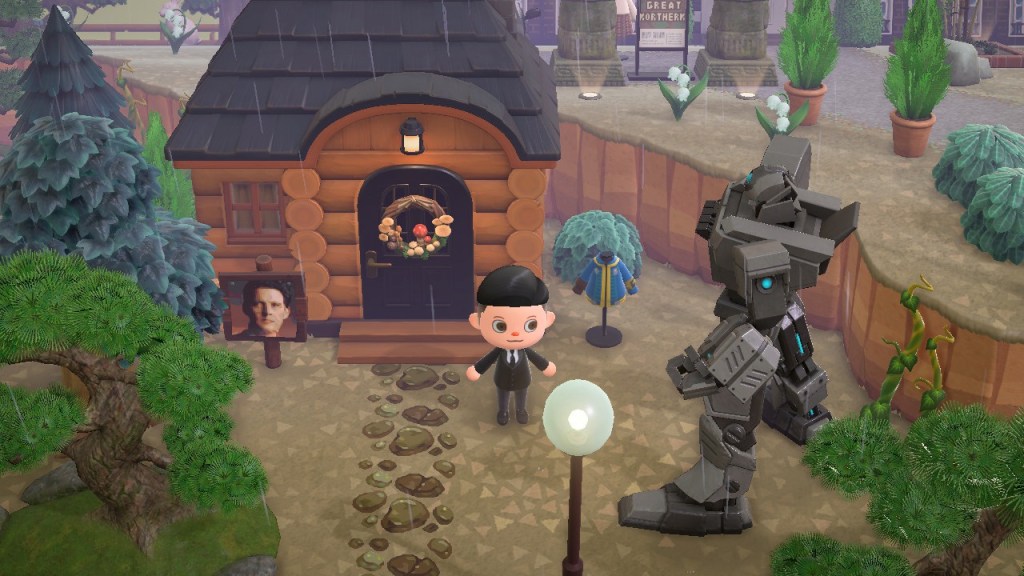
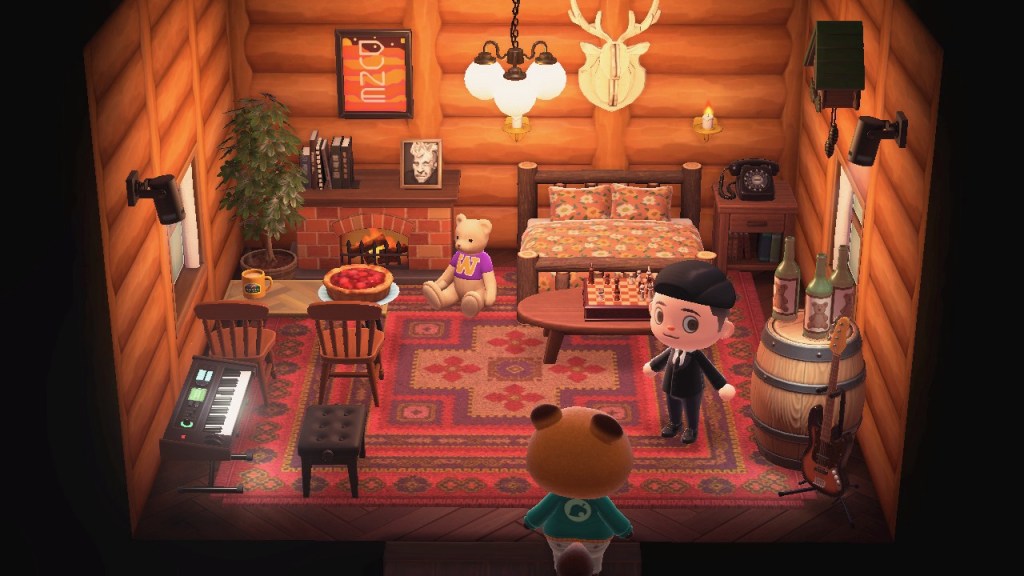
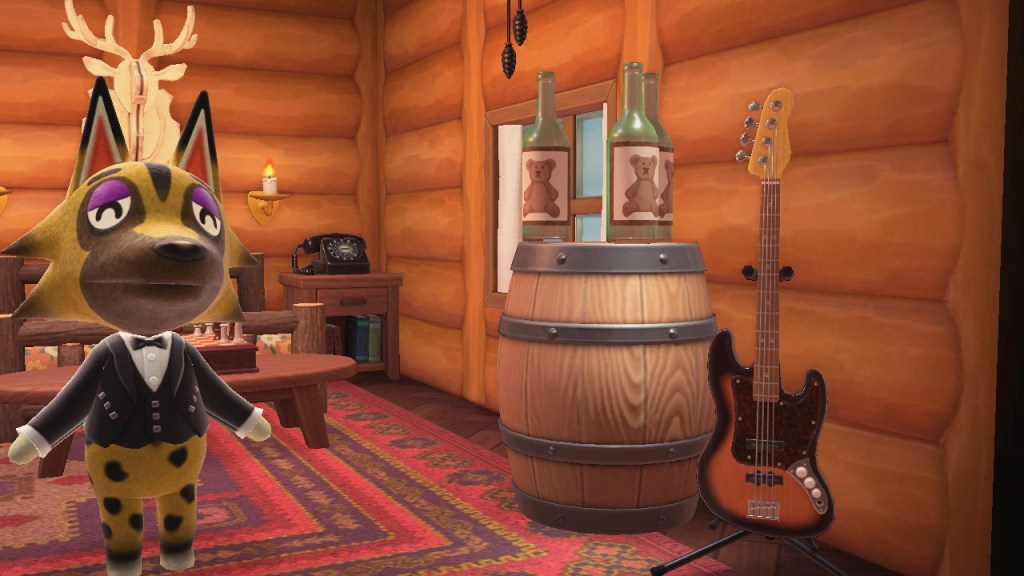
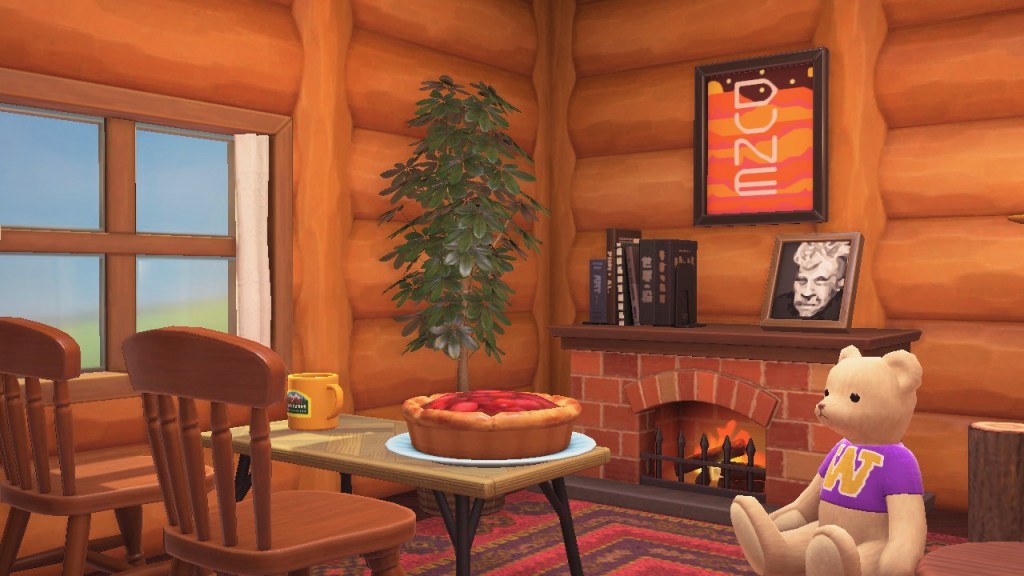
Kyle’s house is special. Kyle MacLachlan lives rent-free in my head as FBI Special Agent Dale Cooper, Paul Atreides, Cliff Vandercave, The Captain, the guy Jessie Spano took for a ride in the swimming pool on Showgirls, a freaking extra on the Changeling, Jeffrey Beaumont, Trey McDougal, his brilliant cameo as a bus driver on Gravity Falls, and (most recently) Hank MacLean, who turned into Dougie Jones at the end of season two of Fallout. He is the most familiar face on my television with his majestic chin and a voice I’d recognize anywhere. His house isn’t just part of this giant homage to Twin Peaks; it’s a shrine to the man behind the man behind the badge. The T-60 armor and his vault jumpsuit sit outside his cabin because it’s just too damn big to fit inside. Despite being strikingly similar to room 315 at the Great Northern Hotel, there are tributes to Kyle all over the place. A portrait of David Lynch, a Dune movie poster, a teddy bear wearing a Washington State University sweater, a keyboard and a base guitar, and a barrel of Pursued by Bear wine. Naturally, there’s also a cup of damn fine coffee, a cherry pie that’ll kill ya, and a chessboard for playing out his game of cat and mouse with Windom Earle.
Just as I was finishing up my island, Nintendo released an update that added a hotel to the pier. Sure, it would have been easier to just ignore it and hope visitors didn’t venture out onto the pier, but I made it The Great Northern South. The Great Northern expanded and opened a second location. There. I fixed it.
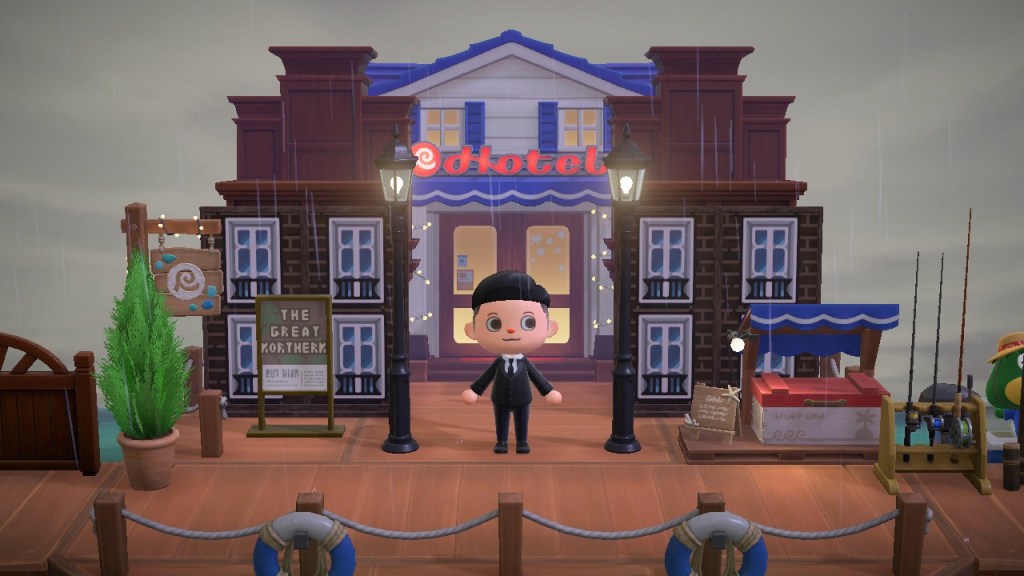
So there you have it. Thanks for following along and experiencing Twin Peaks through the eyes of a fellow fanatic. Come back soon.
 Caitlin Whitaker
 Caitlin Whitaker